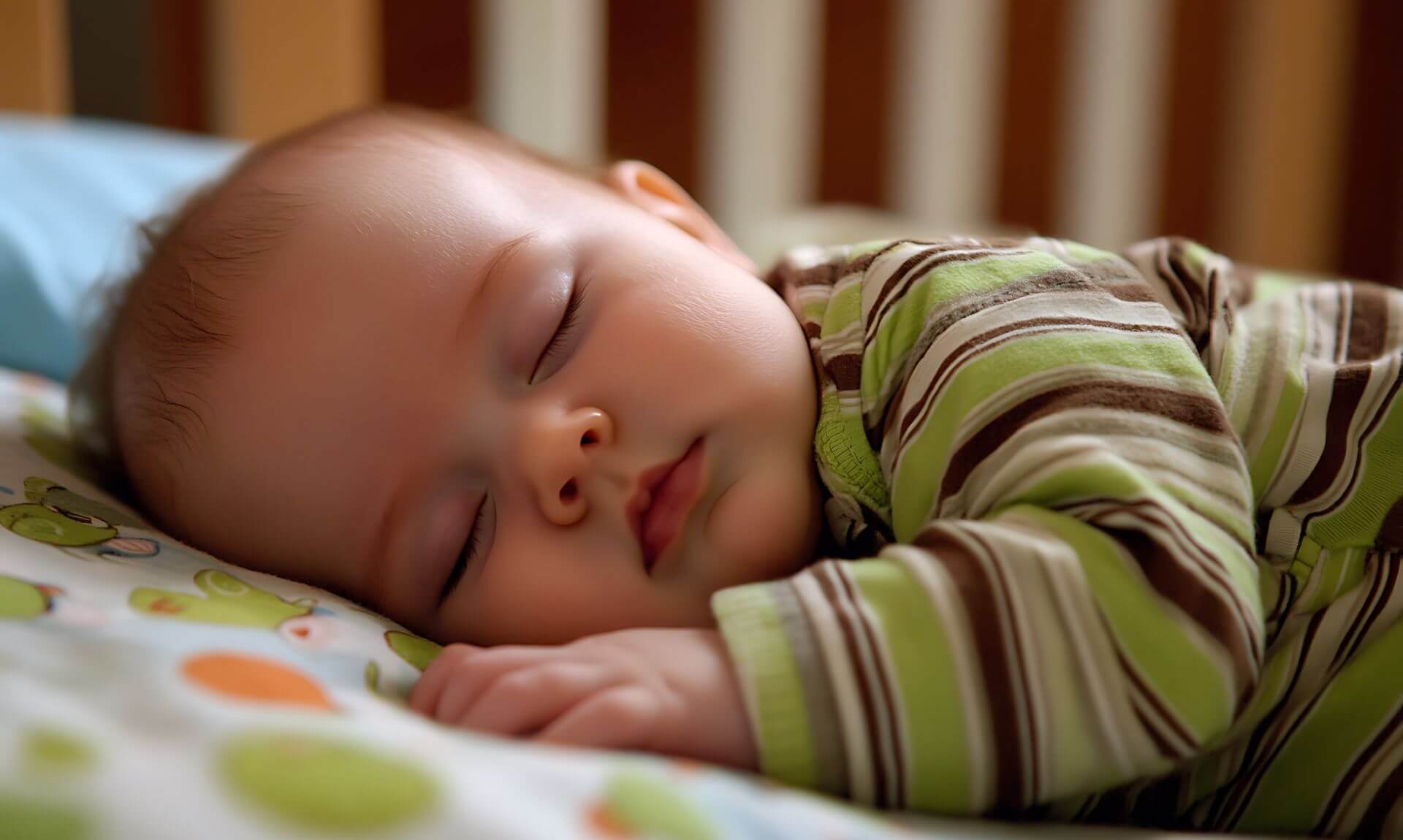
What to Do When You See Hair Loss in Newborn Babies

Finding clumps of hair on your newborn’s sheet or noticing a bald patch forming can catch you off guard, especially if nobody warned you it might happen. Plenty of babies lose some or all of their hair in the first few months of life, and in most cases it has nothing to do with anything you did or didn’t do.
Some babies shed a little hair gradually. Others seem to go from a full head of hair to noticeably patchy within a week or two, which can feel alarming even when you know it’s common. The good news is that newborn hair loss is almost always harmless and temporary.
There are a small number of situations where hair loss can point to something that needs medical attention, such as a thyroid problem, an autoimmune condition, a nutritional deficiency, or a hair shaft abnormality. These are uncommon. If your baby is also lethargic, feeding poorly, gaining weight slowly, or the scalp looks inflamed, scarred or unusual in any way, it’s worth getting checked by your GP, health visitor or paediatrician rather than waiting to see what happens.
Why Do Newborns Lose Their Hair?
Babies start growing hair in the womb from around the fifth month of pregnancy. By around 28 weeks, that hair growth slows down and the hairs enter a resting phase, ready to be shed. Some of this “birth hair” falls out before delivery, and some falls out gradually over the first three to four months after birth. This is why some newborns arrive with a thick head of hair and others are almost completely bald, and why a baby who was born with lots of hair can lose most of it within weeks.
Once the birth hair sheds, it’s replaced by finer, softer hair called vellus hair, which usually sticks around until your baby is somewhere between one and two years old, when it’s gradually replaced again by thicker, more mature hair. In some babies, the new hair starts growing in before the old hair has fully fallen out, so you barely notice any shedding at all. In others, there’s a gap between the two, which is when you see the bald patches, thinning, or that sudden “where did all the hair go” moment.
None of this is caused by anything happening on the outside, like shampoo, brushing, or how often you wash your baby’s hair. It’s simply the normal cycle of hair growth resetting itself after birth. If you’re keeping a baby book or taking photos, it can be reassuring to look back in a few months and see how quickly it grows back, usually within six to twelve months, though the texture and even the colour can be quite different from the original hair.

Friction and Positional Hair Loss
A lot of the bald patches parents notice, especially at the back of the head, come from friction rather than the natural shedding cycle. Newborns spend a huge amount of time lying on their backs, whether that’s in a cot, a car seat, a swing, or a pram. All that rubbing against fabric wears the hair away in the spot where the head makes the most contact, which is usually right at the back or slightly to one side if your baby has a preferred way of turning their head.
You’ll sometimes hear this called “occipital alopecia,” but it’s not a medical condition, just a straightforward case of wear and tear. It tends to resolve on its own once your baby starts spending more time upright, sitting, and eventually crawling.
Safe sleep guidance is clear that babies should be put down on their backs to sleep, so that part isn’t something to change. What you can do is give your baby supervised tummy time while they’re awake and alert, several short sessions a day rather than one long one, which also helps with neck and shoulder strength. Varying where your baby naps during the day (a bit of time in a bouncer, a bit in your arms, a bit on a mat) can also reduce how much time the same patch of scalp spends under pressure.
Cradle Cap and Hair Loss
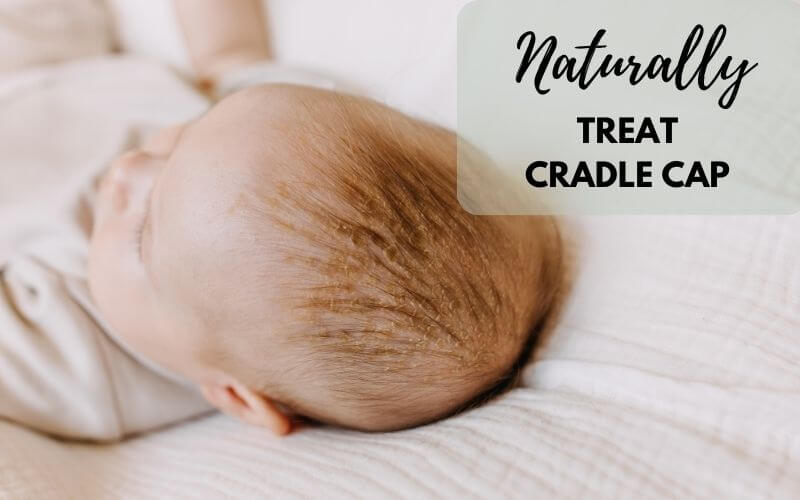
Cradle cap is that yellowish or orangish, scaly, sometimes greasy-looking patch that forms on a baby’s scalp, and it often shows up around the same time as normal hair shedding, which can make parents assume one is causing the other. Doctors aren’t entirely sure what triggers cradle cap, but it isn’t caused by poor hygiene, allergies, or infection. It’s thought to be related to overactive sebaceous (oil) glands responding to hormonal changes left over from pregnancy, sometimes combined with an overgrowth of a naturally occurring yeast on the skin.
If cradle cap is quite thick or widespread, it can occasionally pull out or loosen hair when the scales are removed, but in most cases the two things are just happening at the same time rather than one causing the other. Either way, the hair grows back once the shedding cycle finishes and the scalp settles down.
What You Can Do
You can’t stop or speed up the natural hair shedding cycle, and you shouldn’t try to. There’s no product, oil, or shampoo that will make newborn hair “stay put,” because the process is driven by hormones, not by anything on the surface of the scalp. What you can influence is the friction-related bald spots and, to some extent, cradle cap.
- For friction-related thinning: offer plenty of tummy time when your baby is awake, alternate positions during the day, and consider whether a different car seat liner or pram fabric might be less abrasive.
- For cradle cap: gently massage a small amount of a natural oil such as coconut oil or a baby-safe mineral oil into the scalp, leave it for a few minutes to soften the scales, then loosen them with a soft baby brush or a very soft toothbrush before washing the hair as normal with a mild baby shampoo. Don’t pick at the scales with your fingernails, and don’t be tempted to scrub, as this can irritate the skin.
- Wash regularly, but gently: a couple of washes a week with a mild shampoo is usually plenty. Over-washing can dry the scalp out and sometimes makes cradle cap worse.
If the cradle cap doesn’t improve after a few treatments, spreads to the eyebrows, behind the ears, or onto the face, or looks red, cracked or infected, get it checked by your GP or health visitor. Occasionally a prescription shampoo or a mild treatment is needed, and there’s no harm in getting a second opinion if you’re not sure what you’re looking at.
When Hair Loss Might Need a Doctor’s Opinion
Most newborn hair loss doesn’t need any treatment at all, but it’s worth knowing what would make it worth a call to your doctor. Patchy hair loss with red, scaly, or ring-shaped marks on the scalp could be a fungal infection such as ringworm (tinea capitis), which needs treatment rather than just time. Completely smooth, round bald patches with no scaling can sometimes be alopecia areata, an autoimmune condition that’s rare in babies but does happen. Hair that looks unusually brittle, sparse everywhere rather than patchy, or that’s accompanied by slow growth, poor weight gain, or unusually dry skin might point to a thyroid issue or a nutritional cause, particularly if there’s a family history of thyroid disease.
None of these are common, and the vast majority of parents reading this will simply be watching normal shedding play out. But if something about your baby’s hair or scalp doesn’t sit right with you, or your baby seems unwell in other ways, trust that instinct and get it looked at. It costs nothing to ask, and a quick check from your GP or health visitor can put your mind at ease either way.
For almost every baby, though, this is a passing phase. The bald spots fill in, the fuzzy new hair comes through, and within a year most parents have forgotten it was ever a worry.
Share This Story, Choose Your Platform!


Latest Post


Latest News To Your Inbox
Subscribe to hear about our latest blog posts, competitions and special offers.