
6 Tips on How to Choose the Best Baby Gates for Your Home
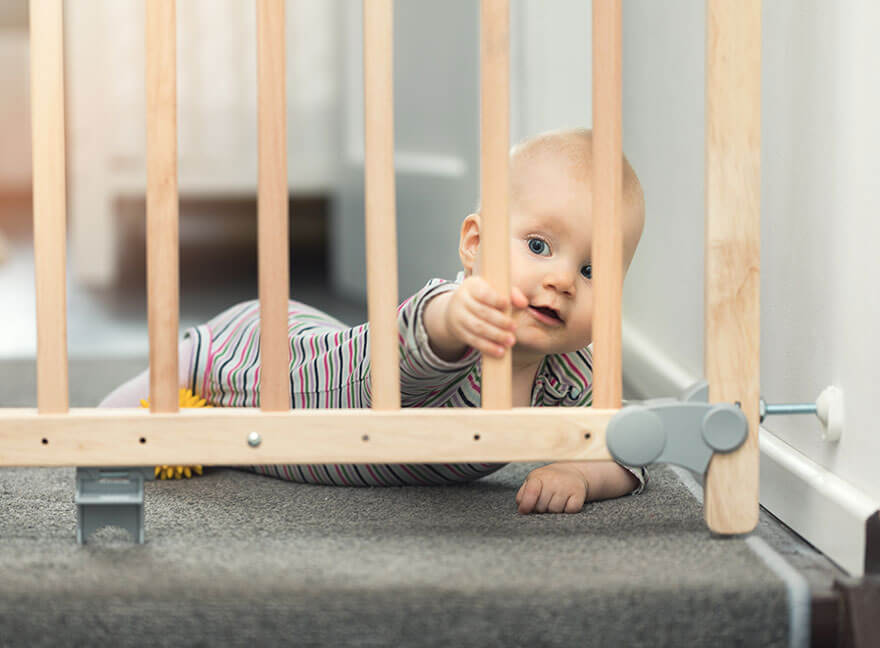
Once you’ve sorted the crib, the car seat and all the newborn essentials, there’s another milestone that catches most parents off guard: the day your baby starts moving. Rolling turns to crawling, crawling turns to cruising along the furniture, and suddenly your living room is full of hazards you never noticed before. If you’ve just realised it’s time to start baby proofing your house properly, you’re not alone. Most parents get caught out by how quickly this stage arrives.
Baby gates are one of the most effective tools you have for keeping a mobile baby or toddler away from stairs, kitchens, fireplaces and anywhere else that isn’t safe for them yet. But walk into any baby shop or scroll through an online store and you’ll see dozens of options, all claiming to be the “best” one. The truth is there isn’t a single best baby gate. There’s a best gate for each spot in your home, and choosing the wrong type for the wrong place is where accidents happen.
Here’s what actually matters when you’re choosing gates for your home, room by room.
Why one gate won’t cover your whole house
Most homes need at least two or three different types of gate, not just two or three of the same one. A gate that’s perfect for keeping a toddler out of the kitchen might be genuinely dangerous at the top of your stairs. The gaps between bars matter, the way it’s fixed to the wall matters, and how tall and sturdy it is matters too, especially once your child is old enough to lean, climb or push against it with real force.
Before you buy anything, measure every opening you need to cover (doorways, hallways, the top and bottom of stairs) and take those measurements with you. Most gates are adjustable within a range, but very wide or very narrow openings sometimes need an extension kit or a specific model.
1. Freestanding gates for open-plan spaces and play areas
Freestanding gates don’t fix to anything. They’re weighted or hinged into a shape (often a hexagon or rectangle) so they can stand on their own, which makes them useful for creating a safe play space in an open-plan living room, or anywhere you can’t fix a gate to the walls. They’re also handy to pack in the car when you’re visiting grandparents or friends who haven’t baby-proofed their home.
The catch is that freestanding gates rely on weight and shape to stay put, not on being properly fixed. A determined toddler who leans hard, or a baby who pulls up on one, can shift or topple them. They work well for calmer babies who respect a boundary once it’s there, but if your child is the type to test every limit by shoving, this probably isn’t the gate for anywhere that matters, like near stairs or a fireplace.
If you’re setting up a play space with one of these, it’s worth making the whole area a bit softer too. Sharp table corners at head height are still a risk even with the gate in place, and a pool noodle over sharp edges is a cheap, easy fix. Just skip this if your baby is still in the mouthing everything phase, since foam isn’t something you want them chewing on.
2. Pressure-mounted gates: fine for doorways, not for the top of stairs
Pressure-mounted gates hold themselves in place by pushing against the walls or door frame on either side, a bit like a tension curtain rod. They don’t need any drilling, which makes them a good option for doorways, the bottom of stairs, or if you’re renting and can’t put holes in the walls.
What they’re not suitable for is the top of a staircase. This is one of the few genuinely firm rules in baby gate safety: any gate at the top of stairs should be hardware-mounted, meaning it’s screwed directly into the wall or banister. A pressure-mounted gate can work loose or get knocked out of position if a toddler leans on it or pulls at it, and at the top of a staircase that’s a serious fall risk. Hardware-mounted gates cost a little more and mean drilling a few small holes, but for stairs it’s worth it. Most manufacturers are clear about this in their instructions, so it’s always worth checking the packaging or product listing before you buy, and if you’re ever unsure, contact the manufacturer directly rather than guess.
Save the pressure-mounted gates for doorways and rooms you want to section off, and use hardware-mounted gates anywhere near a staircase.
3. A gate with a walk-through door will save you a lot of hassle
It’s tempting to save a bit of money and get a simple low gate you can just step over. In practice, this gets old fast. You’ll be carrying your baby, a laundry basket, a plate of dinner, or all three at once, and climbing over a gate every single time isn’t realistic (or safe, if you’re holding a baby).
A gate with a built-in door that opens with a one or two-handed latch means you can walk through properly without bending down or lifting a barrier out of the frame. It also means you can safely buy a taller gate, since you’re not relying on stepping over it. Taller gates last longer, because a low gate that’s easy for you to clear will eventually be easy for your toddler to climb over too.
4. Skip accordion-style gates, and check the gap size on anything you buy
Old-style accordion or diamond-mesh gates look sturdy, but the V-shaped gaps that give them their shape create perfect little footholds and handholds for a climbing toddler. They’ve also been linked to entrapment injuries where a child’s head or limb gets caught in the diamond gaps, which is exactly the opposite of what you want a safety gate to do.
Look instead for gates with vertical bars, spaced closely enough that a small head can’t fit through. Most safety standards call for gaps of around 5 to 6cm (roughly 2 to 2.5 inches) or less. In practice, the easiest way to check is to look for a gate that carries a recognised safety certification for your country (in the UK that’s BS EN 1930, in the US it’s often a JPMA seal), rather than trying to measure gaps yourself with a tape measure in the shop.
5. Choose materials and styles that suit your home, not just the safety aisle
Baby-proofing doesn’t mean your home has to look like a nursery display. Gates now come in wood, metal, and combinations of both, in finishes that can genuinely match your banister or door frames rather than clashing with them.
If you’ve got a mix of wide and narrow openings and don’t want a completely different-looking gate at every doorway, a retractable mesh gate is worth considering. These roll out flat and lock into a track fitted at each side, so they can stretch across wide openings and fold away neatly when not needed. They’re less visually intrusive than a bulky bar gate, though they’re generally better suited to doorways and room dividers than the top of a staircase, so check the manufacturer’s guidance on where they can safely be used.
Spending a bit of time matching gates to your home’s finish makes it far more likely you’ll actually keep them up and use them properly, rather than getting fed up and taking them down early.
6. Don’t forget the garden
Your home isn’t the only place that needs a barrier. Gardens bring their own hazards: ponds, steps, sheds, driveways, and gates that lead out to the street. If there’s any part of your outdoor space you can’t fully childproof, a weather-resistant outdoor gate around that area is the safer option than trying to supervise every corner at once.
Look for gates specifically made for outdoor use, since standard indoor gates aren’t designed to cope with rain, damp or temperature changes and can warp or rust over time.
A quick checklist before you buy
- Measure every opening first, including width and the depth of any door frame or banister post.
- Use hardware-mounted gates at the top of stairs, never pressure-mounted ones.
- Check for a recognised safety certification and read the manufacturer’s guidance on where the gate can and can’t be used.
- Choose a gate with a walk-through door if you’ll be carrying things through it regularly, which you will be.
- Avoid diamond-mesh or accordion designs, and check bar spacing on anything you buy secondhand, since older gates may not meet current standards.
Most toddlers outgrow the need for gates somewhere between two and three years old, once they can reliably climb stairs safely on their own and understand not to wander off. Every child is different though, so it’s worth judging this by your own child’s balance and understanding rather than a fixed age, and if you’re ever unsure whether it’s safe to remove a gate, it’s worth chatting it through with your health visitor or GP.
Getting this right takes a bit of research and a tape measure, but it’s time well spent. The safest homes aren’t the ones with the most gates, they’re the ones with the right gate in the right place.
Share This Story, Choose Your Platform!


Latest Post


Latest News To Your Inbox
Subscribe to hear about our latest blog posts, competitions and special offers.