
Is My Baby Too Attached To Me?
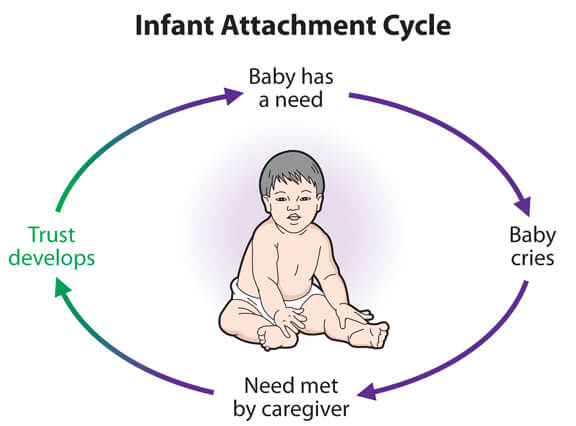
If you’ve got a baby who screams the second you leave the room, wants to be held constantly, and treats every other adult like a stranger even when they’re not, it’s fair to wonder if something’s off. The short answer is: almost certainly not. What feels like “too attached” is usually just a baby doing exactly what babies are wired to do. But it’s worth understanding what’s actually going on, because that makes the clingy phases a lot easier to live with.
What attachment actually is
Attachment is the emotional bond that forms between a baby and the people who care for them most consistently, usually parents, but it can include grandparents, childminders or anyone else who’s regularly involved. It’s not something you have to engineer. It develops naturally through everyday interactions: feeding, nappy changes, being picked up when upset, having someone respond when they cry or babble at you.
This isn’t just a nice bonus for family life. Decades of developmental research (much of it building on the work of psychologists John Bowlby and Mary Ainsworth) show that a secure attachment in the first couple of years shapes how children handle stress, form friendships and regulate their emotions later on. So the fact that your baby wants you, specifically, and not just anyone, is a sign things are going right.
Attachment sits on a spectrum
Some babies are naturally more clingy, others are happier being passed around or left to explore on their own. Temperament plays a big part here, some babies are just more sensitive to change or new faces, and that’s got nothing to do with how good a parent you are. Most babies sit somewhere in the middle, and where your baby falls on that spectrum can shift week to week, especially around developmental leaps, teething, illness or changes at home.
Signs your baby is securely attached (not “too” attached)
A lot of behaviour that gets labelled as excessive clinginess is textbook secure attachment. Look out for:
- Protest when you leave. Fussing or crying when you walk out of the room, especially between around 6 and 18 months, is developmentally normal. It usually means your baby has a clear sense of who their main people are.
- Wanting to be held. Physical closeness is genuinely regulating for babies. Your voice, heartbeat and smell are familiar and calming, particularly when they’re overtired, overstimulated or unwell.
- Checking back with you. Watch a toddler at a playgroup: they’ll wander off to explore, then glance back or return to you before heading off again. That’s called “secure base behaviour” and it’s actually a sign of confidence, not insecurity.
- Settling faster with you than with anyone else. This is normal and doesn’t mean other caregivers are doing anything wrong. Babies simply have a hierarchy of comfort, and you’re usually at the top of it for a good long while.
Separation anxiety: what’s normal, and what actually helps
Separation anxiety tends to appear from around 6 to 8 months, often peaks between 12 and 18 months, and usually eases by age 2 to 3, though every child’s timeline is different. It often gets worse just as a baby is becoming more mobile and more aware that “out of sight” doesn’t mean “gone”, which is a big cognitive leap, not a step backwards.
A few things that genuinely help, rather than just papering over it:
- Keep goodbyes short and calm. Long, drawn-out goodbyes with lots of hesitation tend to wind babies up more, not less.
- Practise short separations before you need to do a long one. Leaving the room for a minute while narrating what you’re doing (“I’m just getting your bottle, I’ll be right back”) builds trust in small doses.
- Stick to a goodbye routine. A quick cuddle, the same phrase every time (“Mummy’s going to work, Nana’s got you”), then leave. Consistency helps them predict what’s coming.
- Don’t sneak out. It might feel easier in the moment, but it can make a baby more anxious about you disappearing without warning.
When to check in with someone: attachment difficulties
It’s worth being honest that not all attachment develops smoothly, and this is where the old distinction between “secure” and “insecure” attachment comes in. Insecure attachment can develop when a baby’s cries or needs go unmet repeatedly over time, not from the odd unavoidable delay (every parent misses a cry now and then), but from a consistent pattern where a baby learns that reaching out doesn’t reliably bring comfort.
This is genuinely different from normal clinginess, and it’s not something most parents need to worry about from ordinary busy days, illness, or the occasional stretch where you’re stretched thin. But if you’re concerned, for instance if your baby seems unusually withdrawn, doesn’t seek comfort from anyone even when distressed, or you’re dealing with your own struggles such as postnatal depression that are making it hard to respond to your baby the way you’d like, please talk to your health visitor or GP. They can point you towards support, and getting help early makes a real difference, both for you and your baby.
Daycare, nursery and attachment
Starting nursery or going to a childminder doesn’t undo the attachment you’ve built at home. Babies are capable of forming secure attachments with more than one trusted adult at the same time, this is sometimes called having a “hierarchy of attachments”, with you likely still at the top.
That said, the transition period can be genuinely tough, both for your baby and for you. A few things that tend to make it easier:
- Do settling-in sessions if your nursery offers them, gradually increasing the time you’re apart over a week or two rather than a full-day drop straight away.
- Bring something familiar, a comforter, muslin or small toy that smells like home.
- Expect a bit of regression (clinginess, disrupted sleep, more tears) for the first week or two. It usually settles as your baby builds trust in their new carers.
- Ask staff for a quick handover at pickup about mood and naps. Consistent, warm caregiving from nursery staff matters more for your baby’s wellbeing than the number of hours spent there.
If your baby seems distressed at nursery for weeks with no improvement, it’s worth raising with staff and, if needed, your health visitor. That’s more likely a sign the setting or key worker relationship needs adjusting than a sign the whole idea of daycare is wrong for your child.
Crying for you, all smiles for a stranger
This one confuses a lot of parents. Your baby howls the second you pick them up if they’re overtired or unsettled, but happily lets a stranger hold them at the supermarket. It feels backwards, but it makes sense: you’re the person they feel safe enough to fall apart in front of. Strangers get the “polite face” because there’s no deep trust there yet for your baby to let their guard down. Save the big, messy emotions for the people who feel safest, that’s actually a compliment, even when it doesn’t feel like one at 2am.
So, can a baby be “too attached”?
In the clinical sense, no. Attachment itself isn’t something that becomes a problem by being “too strong”. What sometimes gets called excessive attachment is usually just a securely attached baby going through a clingy phase, often tied to a developmental stage, a change in routine, teething, or a stretch of being unwell.
The exception is if the clinginess is so intense and constant that it’s stopping your baby from doing normal things for their age, such as never settling with any other trusted adult even for short periods well past toddlerhood, or if it’s paired with other signs that are worrying you, such as very limited eye contact, no interest in comfort at all, or a loss of skills they’d previously had. In those cases, it’s worth a conversation with your GP or health visitor, not because attachment is “too strong”, but because those specific signs deserve a proper look.
Looking after yourself while your baby is going through a clingy phase
Clingy phases are exhausting, and it’s fine to admit that. A few practical things that help:
- Share the load where you can. Even if your baby protests at first, a partner, grandparent or trusted friend taking over for short stretches gives them practice with other safe adults, and gives you a break.
- Wear your baby if that suits you. A sling or carrier keeps them close and settled while freeing up your hands, which can take the edge off a particularly velcro-ish week.
- Remember the phase will shift. Clingy periods tend to ease as babies gain new skills and confidence, even if it doesn’t feel that way at 3am.
Your baby wanting you above everyone else isn’t a problem to fix. It’s the result of you showing up for them, over and over, in ordinary unglamorous ways: the night feeds, the nappy changes, the picking them up when they cry. That consistency is exactly what builds the trust they’re clinging to. Enjoy the cuddles while they last, they don’t stay this small for long.
Share This Story, Choose Your Platform!


Latest Post


Latest News To Your Inbox
Subscribe to hear about our latest blog posts, competitions and special offers.