
Quick Tips for Baby’s First Bath at Home

However many babies you’ve bathed before, that first bath at home with a brand new baby feels completely different to bath time in hospital. You’ve got no midwife hovering nearby, no reassuring “you’re doing fine”, just you, a tiny slippery person, and a lot of second-guessing. That’s completely normal. Most new parents second-guess almost every decision they make in those early weeks, bath time included.
The good news is that baby’s first bath at home doesn’t need to be complicated. Once you know roughly what to expect, and you’ve got your supplies laid out before you start, it becomes a lot less daunting. Here’s what actually matters.
Baby’s First Bath at Home
When Should You Give Baby Their First Bath?
Newborns don’t get grubby the way older babies and toddlers do, so there’s genuinely no rush to bathe them straight away. Many hospitals and birth centres now delay that very first bath for at least 24 hours, partly to help baby’s temperature settle and partly to let the vernix caseosa (that white, waxy coating some newborns are born with) stay on the skin a little longer, since it seems to have some protective, moisturising qualities. The World Health Organization recommends waiting at least 24 hours where possible, so if your baby was washed very soon after birth, don’t worry, but do ask your midwife what was done and why.
Once you’re home, there’s no need to bathe your newborn every day. A couple of times a week is usually plenty for a baby who isn’t crawling around or eating solid food yet. Bathing too often can dry out newborn skin, which is already thinner and more delicate than yours. In between baths, a warm flannel over the face, neck, hands and nappy area keeps baby clean enough.
Many parents also stick to sponge baths (using a bowl of warm water and a soft cloth, with baby wrapped in a towel) until the umbilical cord stump has dried up and fallen off, usually somewhere between one and three weeks. Guidance on this varies a bit between hospitals, so it’s worth asking your midwife or health visitor what they’d recommend for your baby specifically.
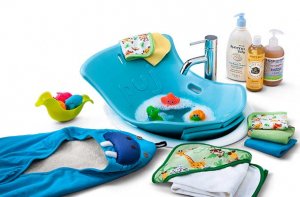
What You Need Before You Start
Get everything within arm’s reach before you undress your baby. You will not want to be running to the airing cupboard for a towel with a wet, wriggling newborn in your hands.
- A warm towel, ideally with a hood, laid out ready to wrap baby in straight away
- A soft washcloth or two
- Mild, fragrance-free baby wash (optional, more on this below)
- Cotton wool for cleaning around the eyes and umbilical stump
- A clean nappy and clothes laid out ready
- A bath thermometer if you have one
- The baby bath, bath seat or basin, filled with around 2 to 3 inches of water
Make sure the room is warm and draught-free before you begin. Newborns lose heat quickly once they’re wet and undressed, so a warm bathroom makes a real difference to how settled they are.
Step by Step: Baby’s First Bath
- Fill the tub or basin with water to about 2 to 3 inches deep, enough to cover baby’s body but not so deep that it goes near the umbilical stump.
- Undress baby and, keeping them wrapped loosely in a towel or muslin, gently wipe around their eyes with damp cotton wool, working from the inner corner outward, using a fresh piece for each eye.
- Lower baby gently into the water feet first, supporting their head and neck with one hand and forearm the entire time. Never let go, even for a second, and never leave a baby alone in the bath, not even to grab something you forgot.
- Wash from the cleanest area to the dirtiest, generally starting at the top and working down, finishing with the nappy area. Use a soft cloth and, if you’re using soap, only a small amount at a time, rinsing as you go so it doesn’t sit on the skin.
- Clean gently around the umbilical stump with a dry cotton bud or cloth if needed, but try not to soak or tug at it. It should be left to fall off naturally.
- Wash baby’s head last. Tip their head back very slightly and use a cupped hand or a cloth to rinse, letting water run away from the face rather than over it, to keep soap or shampoo out of their eyes.
- Lift baby out (again, feet first tends to feel more secure) and wrap them immediately in a warm, dry towel. Pat rather than rub the skin dry, paying attention to skin folds at the neck, armpits and groin.
The whole thing shouldn’t take more than five to ten minutes for a newborn. Short and calm is much better than long and stressful, for both of you.
Getting the Water Temperature Right

This is one area where it’s worth being genuinely careful, since newborn skin is thin and babies can’t regulate their body temperature the way older children can. Run the cold tap first, then add warm water, rather than the other way round, so there’s less chance of a sudden blast of hot water reaching baby’s skin. Aim for water around 37 to 38°C (98 to 100°F), which should feel warm but not hot to the inside of your wrist or elbow.
A bath thermometer takes the guesswork out of this and is a worthwhile few pounds to spend. If you don’t have one, testing with your inner wrist or elbow (not your hand, which is less sensitive) is the next best option. If it feels distinctly hot to you, it’s too hot for baby.
It’s also worth turning your home water heater down to around 49°C (120°F) if it isn’t already, purely so there’s no risk of scalding from the tap itself, not just the bath water. This matters even more once baby is older and starts reaching for taps themselves.
Don’t let the water go cold either. If baby seems to be shivering or their lips or fingertips look bluish, get them out, wrap them up, and warm them through skin to skin contact with you rather than trying to top up the bath water.
Do You Need a Bath Seat or Baby Bath Tub?

A newborn can’t sit up, so what you actually need is something that supports their whole body safely while leaving your hands free to wash them. Trying to hold a wet, soapy newborn in one arm while washing with the other is harder than it sounds, and slippery skin plus a small baby is not a great combination.
Most parents use either a dedicated baby bath (a small plastic tub that sits inside your regular bath or on a stand), or a bath support insert with a mesh or foam sling that cradles baby and sits inside a standard bath. Some newer designs combine both, with a built-in non-slip seat for newborns that later converts for older babies who can sit unsupported. Whichever you choose, check it has a stable base and won’t tip over on a wet floor.
Choosing a Soap or Wash for Baby’s First Bath

Newborn skin is thinner, more absorbent and more easily irritated than adult or older child skin, and its natural barrier is still developing. Plenty of parents skip soap altogether for the first few weeks and just use plain warm water, which is perfectly adequate for cleaning a newborn who isn’t yet crawling around or getting into anything messy.
If you do want to use a wash, look for one that’s fragrance-free, labelled for newborns, and has a short, simple ingredients list. The EWG’s Skin Deep database is a useful independent tool if you want to check the ingredients in a product before buying it. Whatever you choose, do a small patch test on baby’s forearm or thigh first and watch for any redness over the next day, since some babies react to products that are marketed as gentle. If you notice any rash, dryness or irritation after a bath, stop using the product and mention it to your health visitor or GP.
Massage Before the Bath, or After?

There’s no single right answer here, it really depends on your baby. Some babies find bath time unsettling, and a calm massage beforehand can help them relax into it. Others get upset the moment they’re undressed and exposed to cooler air, in which case massaging afterward, once they’re warm and wrapped, tends to work better.
A practical approach many parents settle into is combining the after-bath moisturising with a gentle massage, using a small amount of plain, unscented oil or lotion. Coconut oil is a popular, simple option, though if there’s a family history of nut allergies it’s worth checking with your GP or health visitor first, since some babies can react to nut-derived oils even applied to the skin. Keep massage strokes light and slow, and stop if baby seems unsettled rather than soothed.
Bathing a Premature Baby at Home
If your baby was born prematurely, take a little extra care with temperature. Premature babies often struggle more to regulate their own body heat and can lose warmth faster than full term babies during a bath. Sponge baths are a sensible option for the first while, as long as the nappy area is cleaned thoroughly at every change in the meantime.
The same basic steps apply as with any newborn bath, just with extra attention to keeping the room warm, keeping the bath short, and getting baby dry and dressed quickly afterward. Your neonatal team or health visitor will usually give you specific guidance based on your baby’s age and weight, and it’s worth following their advice over general tips like these, since every premature baby’s needs are a little different.
A Few Final Safety Reminders
Never leave a baby alone in the bath, even propped in a bath seat, even for a few seconds. If the phone rings or the doorbell goes, either take baby with you wrapped in a towel or let it go. Keep one hand supporting baby at all times during the bath itself, and make sure everything you need is within reach before you start so you’re never tempted to look away.
Giving your baby their first bath at home is a genuine milestone, and it’s fine if it feels a bit clumsy the first few times. Most parents get more confident within a week or two, once bath time settles into a routine. Prepare your supplies, keep the water at a sensible temperature, go slowly, and don’t be afraid to ask your health visitor or midwife any questions that come up along the way. They will have heard them all before.
Share This Story, Choose Your Platform!


Latest Post


Latest News To Your Inbox
Subscribe to hear about our latest blog posts, competitions and special offers.