
7 Easy Homemade Baby Care Products For A Natural Touch
Making your own baby care products can be a lovely way to know exactly what is touching your baby’s skin, and it can save you money too. Shop-bought baby toiletries often contain a long list of preservatives, synthetic fragrance and other ingredients that some parents would rather avoid, especially in the newborn weeks when skin is at its most sensitive.
Before you start mixing things up in your kitchen, a few honest words of caution. Homemade products don’t have the preservatives that keep shop-bought creams and wipes stable for months, so they generally need using up within a few weeks and storing in a cool place (the fridge is often best). Always do a patch test on a small area of your baby’s skin, usually the inside of the wrist or forearm, and wait 24 hours before using anything new more widely. If you notice redness, spots or your baby seems unsettled after using a new product, stop and speak to your health visitor, midwife or GP.
Essential oils deserve a special mention. Many are simply not recommended for babies under three months old, and some (peppermint and eucalyptus, for example) are best avoided in young children altogether because they can affect breathing. If your baby is very young, or has eczema or particularly sensitive skin, it’s fine to leave essential oils out of any of these recipes entirely, or to check with your health visitor or a qualified aromatherapist first about which oils, if any, are appropriate and in what dilution.
7 Homemade Baby Care Products You Can Make At Home
1. Homemade Baby Balm

This balm sets solid like a lotion bar and is lovely for dry patches, chapped cheeks or general moisturising after bathtime. Because it’s oil based rather than water based, it lasts much longer than a cream before it needs replacing.
You’ll need:
- 1/4 cup cocoa butter
- 1/4 cup shea butter
- 2 tablespoons olive oil or sweet almond oil
- 1 tablespoon castor oil
- Optional: a few drops of a baby-safe essential oil such as chamomile or lavender (skip this for babies under three months, or if you’re at all unsure, ask your health visitor first)
Method:
- Melt the cocoa butter, shea butter, olive oil and castor oil together in a heatproof glass bowl set over a small pan of simmering water (a double boiler), stirring gently until everything has melted and combined.
- Take it off the heat and let it cool for a minute or two before stirring in your essential oil, if using.
- Pour into a clean glass jar and leave to cool and set completely, this can take a few hours at room temperature or about 30 minutes in the fridge.
- Use a small amount, warmed between your fingers, on dry or chapped skin.
Because there’s no water in this recipe, it doesn’t need refrigerating and should keep well for several months stored somewhere cool and dark.
2. DIY Baby-Safe Laundry Detergent
Regular laundry detergent can leave a residue that irritates newborn skin, and it’s a particular problem with cloth nappies, where soap build-up can make them repel liquid instead of absorbing it. This simple mix avoids that.
- 1/3 cup baby-mild, unscented liquid castile soap (Dr Bronner’s Baby Mild is a common choice)
- 1 teaspoon vegetable glycerine
- Optional: 10 drops tea tree essential oil, useful for tackling odour-causing bacteria, but leave this out for newborns or if your baby has sensitive skin
Mix the soap, glycerine and oil together in a cup, then add it to your washing machine as you would normal detergent and wash on your usual cycle. For cloth nappies, run an extra rinse afterwards to make sure every trace of soap is out, since any residue left behind can reduce absorbency. If you’re using this on nappies for the first time, it’s worth testing on one nappy first to check it rinses clean before doing a full load.

3. Natural Diaper Rash Cream
A simple barrier cream can help protect skin between nappy changes and soothe mild redness. This version uses beeswax to create a protective layer, with the option of adding zinc oxide for extra barrier protection, which is the same active ingredient found in many shop-bought nappy creams.
- 2 oz (about 4 tablespoons) beeswax pellets
- 1/4 cup coconut oil
- 1/4 cup shea butter
- 1 tablespoon non-nano zinc oxide powder (optional, this is what gives shop-bought barrier creams their protective layer, look for it at a health food shop or online)
- A few drops of chamomile or lavender essential oil (optional, skip for babies under three months)
Method:
- Melt the beeswax, coconut oil and shea butter together in a heatproof glass bowl over simmering water, or in the microwave in 30-second bursts at half power, stirring in between, until fully melted.
- Take off the heat and let it cool slightly, then whisk in the zinc oxide powder if you’re using it. It won’t fully dissolve, so whisk well to keep it evenly suspended, and wear a mask or work somewhere well ventilated when measuring out the powder as it’s very fine.
- Stir in your essential oil if using, then pour into clean tins or jars and leave to cool completely before putting the lid on.
Apply a thin layer at each nappy change over clean, dry skin. If a rash doesn’t start improving within two or three days, spreads, blisters, or your baby seems uncomfortable or feverish, it’s worth getting it checked by your GP or health visitor, it could be a fungal rash that needs a specific antifungal cream rather than a barrier cream.
4. All-Natural Baby Shampoo and Body Wash
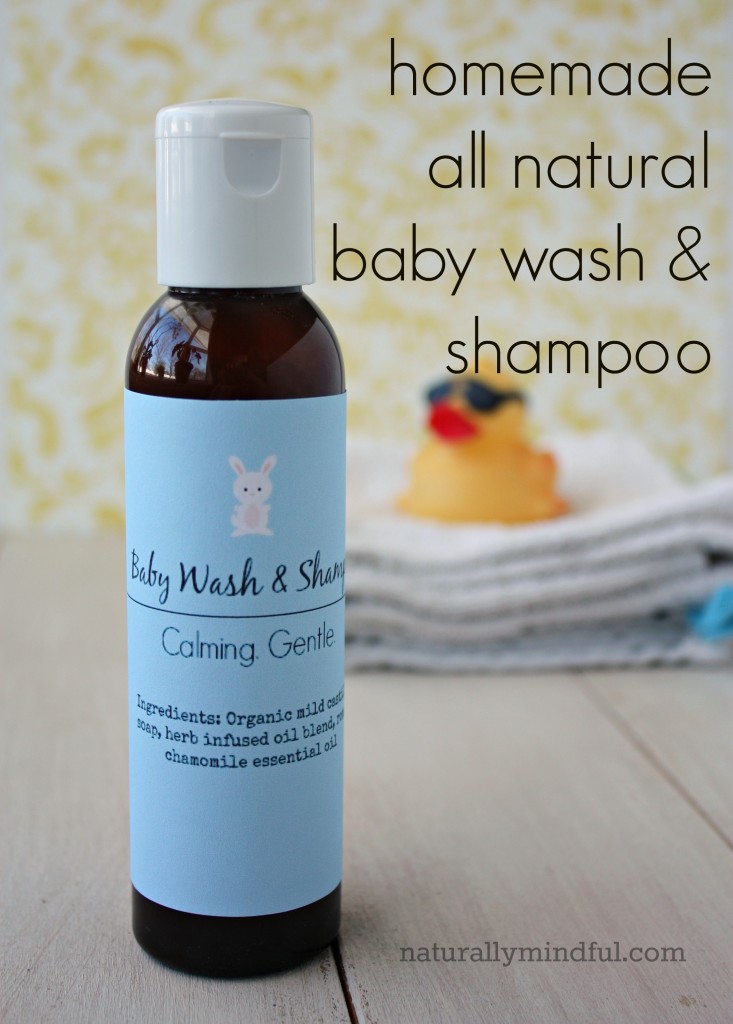
This gentle wash combines a mild castile soap base with calming calendula and chamomile. Worth knowing: castile soap is naturally alkaline, which is fine for most babies but can be a little drying for those prone to eczema, so patch test first and see how your baby’s skin responds over a few washes.
- 1/2 cup mild, tear-free liquid castile soap (a baby-specific one, unscented)
- 1 teaspoon calendula or chamomile infused oil
- A few drops of chamomile essential oil (optional, best left out for newborns)
Combine the ingredients in a clean pump bottle and shake gently before each use. For very young babies, it’s often gentler to squeeze a small amount into a bowl of water and use that diluted mixture with a soft cloth rather than applying it directly. Also worth knowing, many health visitors suggest newborns don’t actually need soap or wash at all in the early weeks, plain warm water is usually enough, so don’t feel you need to use this every single bathtime.
5. Natural Teething Relief

Homemade herbal tinctures for teething come up a lot in natural parenting circles, but they’re one area worth being genuinely careful with. Tinctures are concentrated, doses for babies are tricky to get right, and there isn’t strong evidence behind many of the herbs commonly suggested. If you want to try an herbal remedy for teething, please talk to your GP, health visitor or a qualified herbalist first about what’s actually safe for your baby’s age and weight.
A few things that are genuinely useful and low-risk for teething discomfort:
- A clean, damp flannel that’s been chilled in the fridge (not the freezer, which can make it too hard) for your baby to chew on.
- A firm, solid silicone or rubber teething ring, chilled rather than frozen.
- Gently massaging your baby’s gums with a clean finger.
- Age-appropriate infant paracetamol or ibuprofen if your baby seems genuinely uncomfortable, following the dosing instructions for their age and weight, or as advised by your pharmacist or GP.
Two safety notes worth flagging clearly: never give honey to a baby under 12 months, even a tiny amount, because of the risk of infant botulism. And amber teething necklaces are best avoided altogether, they carry a choking and strangulation risk and there’s no good evidence they actually help with teething pain.
6. Natural Baby Powder

Most health visitors these days steer parents away from talc-based powders because loose powder can be inhaled and irrit
Share This Story, Choose Your Platform!



Latest Post


Latest News To Your Inbox
Subscribe to hear about our latest blog posts, competitions and special offers.