
How to Discipline Your Baby without Spanking
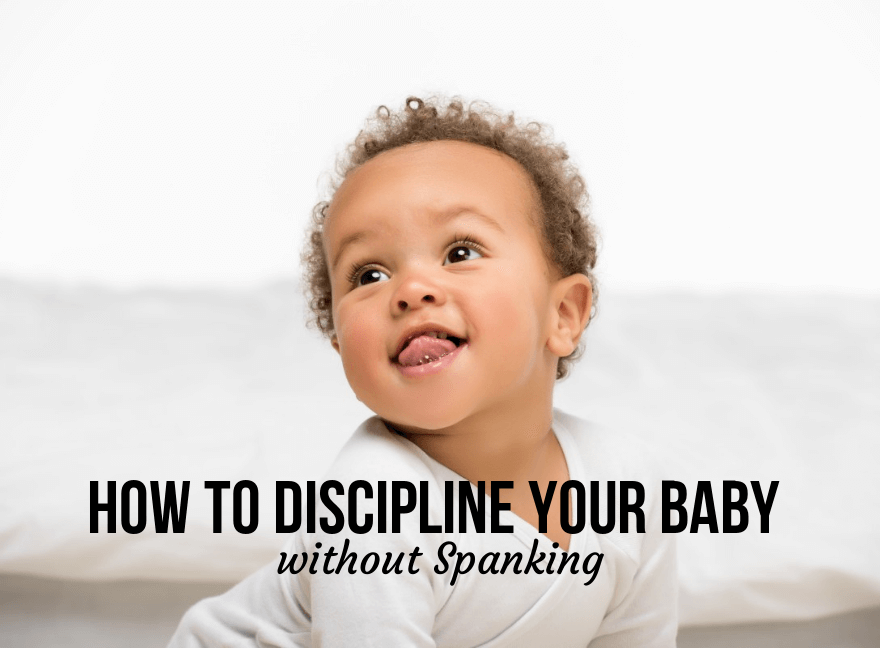
Plenty of parents assume discipline is something you worry about later, once your baby turns into a toddler who throws food and says “no” to everything. Actually, the groundwork gets laid much earlier than that. From the day your baby is born, the way you respond to their cries, their frustration and their curiosity starts building the relationship that all future discipline will rest on.
But here’s the bit that gets missed a lot: a baby, especially one under a year old, isn’t capable of “misbehaving” in the way we usually mean it. They can’t reason, they can’t remember rules for long, and the part of the brain responsible for impulse control (the prefrontal cortex) doesn’t really mature until well into childhood, sometimes not until the early twenties. So while this article talks about discipline, for a baby it really means guidance, safety and connection, not punishment.
This piece will walk through practical, gentle ways to guide your baby’s behaviour without spanking, shouting, or shaming. If you’re dealing with a toddler rather than a baby, most of this still applies, you’ll just have more tools available to you as they get older (like simple words and short explanations).
A Quick Word on Spanking
The Royal College of Paediatrics and Child Health, along with most major paediatric and child development bodies, advises against physical punishment of any kind. It doesn’t teach a child what to do instead, it can damage trust, and research consistently links it to worse behavioural outcomes over time rather than better ones, not because children who are spanked are “bad” but because fear teaches children to avoid getting caught, not to understand why something matters.
If you’re worried about your own temper, or you’ve smacked your child and feel awful about it afterwards, you’re not a bad parent, and you’re not alone. Talk to your GP or health visitor. They’ve heard it all before and can point you towards local parenting support or, if needed, someone to talk to about managing anger. There’s no shame in asking for help with this.
How to Guide Your Baby Without Spanking
1. Manage the environment before you manage the behaviour
Babies and toddlers explore with their hands and mouths because that’s genuinely how they learn about the world. It’s not defiance, it’s development. If you find yourself saying “no” to the same thing over and over, the more effective fix is usually to change the environment rather than repeatedly correcting the child.
Go around your home at your baby’s eye level, on your hands and knees if you have to, and look at what’s within reach. Move breakables, cables, remote controls and anything you don’t want handled onto higher shelves or behind closed doors. Use cupboard locks, corner guards and stair gates properly and consistently, not just when you remember. This isn’t giving in, it’s setting your baby (and yourself) up to succeed, because a baby who can’t reach the thing that irritates you can’t be blamed for reaching for it.
As your child gets older and starts understanding simple words, you can start pairing removal with a brief explanation: “That’s not for touching, here’s your toy instead.” Short and calm works far better than a long lecture a toddler won’t follow anyway.
2. Connect before you correct
Dr Laura Markham, a clinical psychologist who writes at Aha! Parenting, puts it well:
“Remember that children misbehave when they feel bad about themselves and disconnected from us.”
Notice when the tricky moments happen. Often it’s when you’re distracted, on your phone, cooking dinner, or deep in conversation with someone else. That’s not a coincidence. Young children’s sense of safety is tied up in feeling connected to you, and when that connection feels thin, they act on it, usually through crying, clinginess or what looks like acting up.
Before you try to correct behaviour, get down to their level, make eye contact, and name what you think they’re feeling: “You’re really frustrated that your brother took the toy.” You don’t have to get it exactly right. The act of trying to understand often calms things down faster than any instruction will.
3. Get outside and let them move
Babies and toddlers have a lot of energy and very few outlets for it. A daily walk in the pram or carrier, or time at a park where a toddler can run, climb and roll around safely, genuinely helps. It’s not just about tiring them out. Physical activity and fresh air help regulate mood in young children, and a child who’s had a chance to move is usually far more cooperative than one who’s been cooped up all day.
If the weather or your circumstances make outdoor time tricky, even ten minutes of rough-and-tumble play, dancing to music, or crawling around the living room floor together can take the edge off.
4. Deal with your own frustration before it boils over
You are allowed to feel irritated by your baby’s behaviour. That’s normal and it doesn’t make you a bad parent. What matters is what you do with that irritation.
Try to notice frustration early, while it’s still mild, rather than waiting until you’re at breaking point. A few things that genuinely help: stepping into another room for thirty seconds if your baby is safe, taking three slow breaths before you speak, or simply saying out loud, “I’m feeling really wound up right now.” Naming it to yourself often takes the heat out of it.
If you notice you’re losing your temper often, that’s worth mentioning to your health visitor or GP, particularly if you’re also feeling low, anxious, or exhausted beyond the normal tiredness of early parenthood. Postnatal depression and anxiety can make ordinary parenting frustrations feel unbearable, and there’s real support available for that.
5. Redirect instead of just saying no
For babies especially, “no” on its own doesn’t mean much and it doesn’t tell them what to do instead. Redirection works far better: swap the phone charger they’ve grabbed for a chunky toy, or move them physically away from the thing they shouldn’t touch while offering something else to focus on.
With toddlers, try to phrase things as what you want rather than only what you don’t: “Feet on the floor” rather than just “Don’t stand on the sofa.” It sounds like a small change but it gives them something to actually do.
6. Comfort strong emotions rather than isolating them
Traditional time outs, sending a child to sit alone as a consequence, are a bit of a mixed bag depending on who you ask. Some child psychologists think a short, calm break can be fine for an older toddler once they understand it isn’t a punishment or rejection. Others, including Dr Markham, argue that removing your presence during a meltdown teaches a child that big feelings make you leave, which for a very young child, whose sense of safety is built entirely around you, can feel frightening rather than instructive.
For babies, time outs aren’t relevant at all, they’re too young to connect a consequence to a cause. What tends to work better at any age under about three is staying close during a meltdown rather than stepping away. Sit with your baby or toddler, hold them if they’ll let you, and let them know you’re not going anywhere even when they’re upset. You’re not rewarding the behaviour by doing this, you’re teaching them that big feelings are survivable and that you’re a safe place to have them.
If your child is genuinely hitting or biting in a way that’s dangerous, it’s fine to calmly move yourself or another child out of reach while staying nearby, that’s about safety, not punishment.
Take a breath before you react
Before you raise your voice or reach for a smack, pause for even two seconds. Ask yourself what you actually want your child to learn from this moment, and whether shouting or smacking is going to teach that, or just teach them to be afraid of you. Most of the time, the answer makes the next step obvious.
None of this means you’ll get it right every time. You won’t, and that’s fine, repair matters more than perfection. If you lose your temper, a simple “I’m sorry I shouted, I was frustrated, I love you” goes a long way, even with a baby who doesn’t understand every word but absolutely understands your tone.
Guiding a baby without spanking takes patience and practice, and it gets easier as you both get more used to it. If you’re struggling, or you’re not sure whether your child’s behaviour is typical for their age, your health visitor or GP is a good first port of call. You don’t have to figure this out entirely on your own.
Share This Story, Choose Your Platform!



Latest Post


Latest News To Your Inbox
Subscribe to hear about our latest blog posts, competitions and special offers.