Why You Should Spend Time On A Baby Memory Book!
Why a Baby Memory Book Is Worth the Effort
The first year with a baby moves in a strange way. Some days crawl by at 3am during a feed, and then suddenly you’re packing away newborn clothes that still smell of them. Most parents say the same thing: they can’t quite remember the small details a few years on, even though they were sure at the time they’d never forget. A baby memory book is really just a way of catching those details before they slip off, so you’ve got something real to hold onto later, not just a vague feeling that it all went fast.
You don’t need to be crafty or organised to make one. You don’t need a spare weekend either. It can be as simple as a notebook where you jot down a few lines every month, or as involved as a full scrapbook with photos, ticket stubs and little notes. What matters is that you start, even if it’s messy and unfinished for a while.
It’s Not Just for Baby, It Can Help Siblings Too
One thing that often gets missed is how useful these books can be for an older brother or sister. Bringing a new baby home is a big adjustment for a toddler or young child, even when they’re excited about it. They can feel pushed out or confused about where they fit now that attention is split.
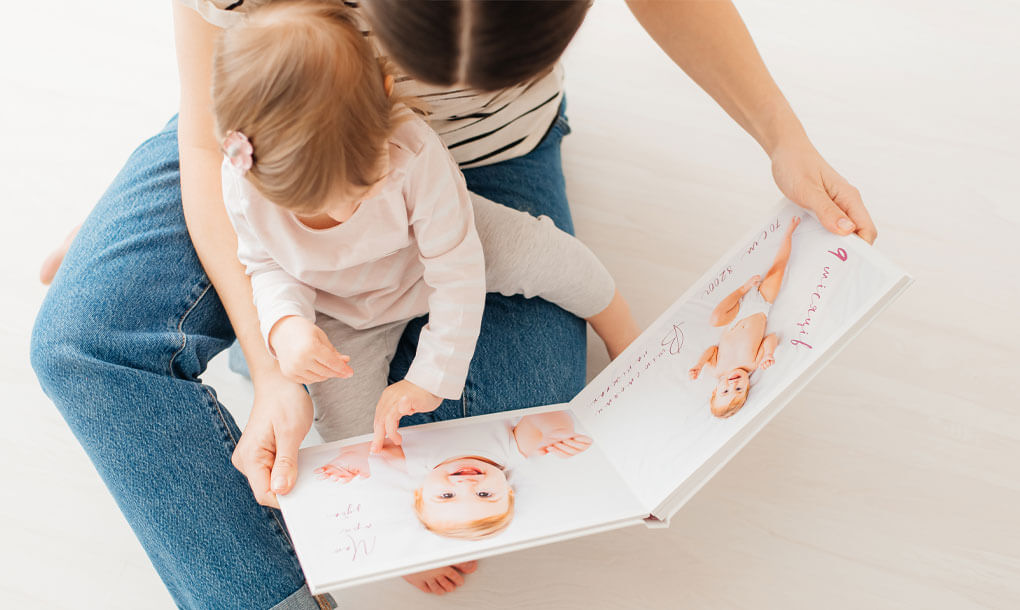
If your older child has their own memory book from when they were a baby, it gives you something concrete to sit down and look through together. You can talk about the milestones they hit, the funny things they did, how much you loved looking after them. It reminds them that they had exactly this same amount of love and attention, and that having a new baby around doesn’t take anything away from their place in the family. It’s not a cure for sibling jealousy, nothing really is, but it can open up a conversation that’s hard to have any other way with a young child.
When to Actually Start Making One
Most parents find the first year is too much of a blur to build a book as they go. You’re running on broken sleep and just trying to get through each day, so realistically, aim to put the book together around the first birthday, once things have settled a bit and you can look back with a clearer head. Some families do it again at each birthday, adding a page or two, so it becomes an ongoing project rather than a one-off task.
In the meantime, the practical thing to do is just collect. Get a box, a drawer, even a large envelope, and use it to catch anything you think you might want later: photos, hospital bracelets, a lock of hair from the first haircut, a card from grandparents, a scrap of the blanket from the coming-home outfit. You don’t need to decide what’s “book-worthy” in the moment. Just save it and sort it out later when you’ve got the headspace.
Items Worth Saving for the Memory Book
- Photographs from hospital, home, and early outings
- Ultrasound images
- Hospital name band or cot card
- Newspaper clippings or birth announcements
- Dried flowers from a bouquet, or a deflated balloon
- Cards, poems, or a coin from their birth year
- Notes on firsts: first smile, first word, first steps
- Anything else that means something to you, even if you can’t explain why yet
You can buy ready-made baby memory books or scrapbooking kits with prompts already built in, which takes some of the pressure off if you’re not sure where to start. Or you can build one from scratch with a plain scrapbook, some tape, glue and whatever bits you like. Neither way is more “correct” than the other. Pick whichever one you’ll actually finish.
Giving It a Personal Touch
Choosing a title or theme for the book is one of the more enjoyable parts. Some parents keep it simple with something like “Baby’s First Year” or the child’s name and birth year. Others go for something that reflects a phrase they said often during pregnancy, a nickname, or a private joke. There’s no formula here. Think about whether you want it to cover just the first year, or leave blank pages so you can keep adding to it as they grow.
A short letter from you, written to your child, is one of the things parents say they’re gladdest they included. It doesn’t need to be polished or long. A page about how you felt the day they were born, what you were hoping for them, what life was like at the time, is something they won’t get anywhere else.
If It Won’t Fit in the Book
Some things are too bulky or three-dimensional to stick on a page, and that’s where a keepsake box comes in. It doesn’t need to match the book exactly, but keeping a similar feel to it (same colour scheme, same general theme) makes the two feel connected rather than like separate, unrelated projects.
Things Parents Often Keep in a Keepsake Box
- First hat and socks
- The coming-home outfit
- First stuffed toy
- First pair of proper shoes
- A monogrammed rattle or christening gift
- Baby jewellery, if you were given any
- First hairbrush or a lock of hair from the first cut
As with the book itself, a small note explaining what something is and why you kept it makes a real difference years later. You’ll be amazed how quickly you forget which onesie was “the” onesie unless you write it down at the time.
Keep the Story Simple
Try not to overload each page with text. A short caption or a couple of sentences under a photo usually says more than a full paragraph crammed into the margins. Think of it less like a diary and more like captions in a photo album, just enough context so that someone flicking through years from now understands what they’re looking at and why it mattered.
You don’t need to be a writer or a designer for this to work. Nobody is grading it. The value is in the fact that you did it at all.
Why It’s Worth Doing, Even When Life Is Full
It’s easy to assume your phone camera roll will do the job instead. In some ways it will, but there’s something different about a physical book you can hand to your child one day, or sit down with your own parents and look through together. Photos on a phone tend to get buried under thousands of others. A memory book stays exactly as it is, ready to be picked up whenever you need it.
Plenty of parents say flicking back through their child’s book has genuinely helped them on harder days, whether that’s a rough patch with a toddler, a bout of the baby blues, or just a day where parenting feels relentless. Reading through something you made in a happier moment can be a small but real comfort. If you’re finding those low days are frequent or lasting, it’s worth mentioning to your GP or health visitor too, a memory book is a lovely thing but it’s not a substitute for support if you’re really struggling.
One mum put it well: “My husband and I get out our girls’ albums and fondly reminisce. Now my daughter is pregnant with our first grandchild, and the first gift I gave her was a baby memory book.”
The long nights and the exhausting first months are real, and no book changes that. But looking back later, most parents find it’s the small ordinary details, not the big milestones, that mean the most: the outfit they came home in, the wonky first birthday cake, the note you wrote at 2am when you couldn’t sleep anyway. Start collecting now, even messily, and you’ll thank yourself for it later.
Share This Story, Choose Your Platform!



Latest Post

Latest News To Your Inbox
Subscribe to hear about our latest blog posts, competitions and special offers.