
Exploring the Astonishing World of Newborn Reflexes
Hey there, fellow parents and baby enthusiasts! Today, I’m thrilled to take you on a deep dive into the fascinating realm of newborn reflexes. If you’ve ever been awed by your little one’s spontaneous movements and wondered about the science behind them, you’re in for a treat. In this comprehensive guide, we’ll unravel the mystery of newborn reflexes, from what they are to their critical role in your baby’s development.
Introduction: The Enigmatic Universe of Newborn Reflexes
Newborn reflexes are like the magic tricks of the baby world. These automatic, involuntary movements are hardwired into your baby’s nervous system, designed by Mother Nature herself to help your little one adapt to their brand-new environment. Let’s start our journey by delving deeper into some of the most intriguing newborn reflexes:
Rooting Reflex
What is it? The rooting reflex is one of the first acts of cooperation between you and your newborn. It’s the adorable phenomenon where your baby instinctively turns their head toward any gentle touch or stroke near their mouth or cheek.
Why is it important? This reflex is the MVP of feeding time. When your baby turns their head towards your breast or a bottle, it makes the crucial process of breastfeeding or bottle-feeding so much smoother and more efficient.
Fun Fact: The rooting reflex can be triggered even by a gentle brush of a mother’s nipple on the baby’s cheek, demonstrating the remarkable sensitivity of a newborn’s skin.
Grasping Reflex
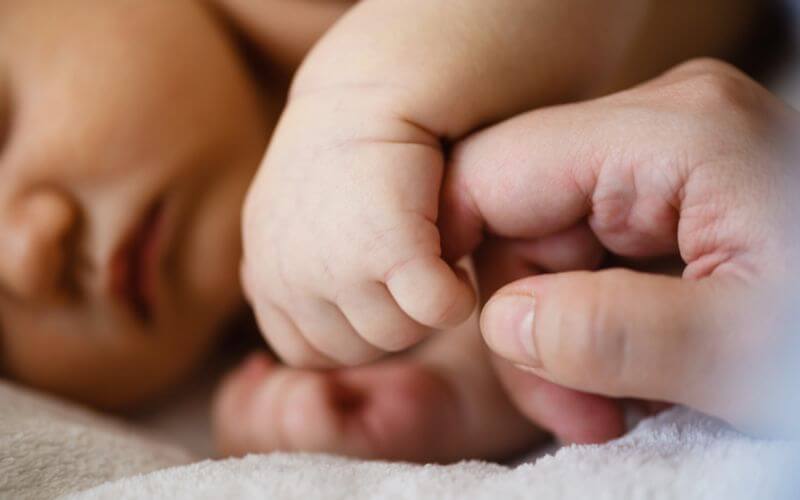
What is it? The grasping reflex is pure wonder. If you place your finger or a tiny object in your baby’s palm, they’ll immediately close their little hand around it with surprising strength.
Why is it important? This reflex is like nature’s way of preparing your baby for a future of dexterity. It lays the groundwork for voluntary hand movements, which are essential for your baby’s ability to hold toys, feed themselves, and eventually master skills like writing.
Fun Fact: The grasping reflex is so strong that your baby can often support their entire body weight hanging from your fingers!
Moro Reflex
What is it? The Moro reflex, often affectionately referred to as the “startle reflex,” is when your baby dramatically throws their arms and legs out, then quickly brings them back in. It’s like a miniature, adorable fireworks show.
Why is it important? This reflex, with its dramatic flair, may seem excessive, but it’s thought to be a vital protective mechanism. It helps your baby respond to sudden stimuli, such as a loud noise or a jolt, by extending their arms and legs as if they’re ready to grab onto something for safety.
Fun Fact: The Moro reflex is a testament to the incredible speed at which your baby’s nervous system can react to unexpected events.
Babinski Reflex
What is it? The Babinski reflex is an intriguing one. It involves your baby’s toes splaying out and curling when the sole of their foot is gently stroked.
Why is it important? While scientists are still unraveling the full story of this reflex, it’s believed to be connected to your baby’s developing nervous system and sensory perception. It’s like their way of saying, “I’m here, and I can feel things!”
Fun Fact: The Babinski reflex is named after the neurologist Joseph Babinski, who first described it in the late 19th century.
The Role of Newborn Reflexes in Development
Now that we’ve explored these remarkable reflexes, let’s dig deeper into why they are so essential for your baby’s development. These reflexes aren’t just cute quirks; they serve as building blocks for a range of crucial skills and abilities your child will develop as they grow.
Building Blocks for Motor Skills
Newborn reflexes are like the scaffolding of a skyscraper. They provide the initial structure upon which future motor skills are built. For example:
- The grasping reflex eventually transforms into voluntary hand movements, which are fundamental for your baby’s ability to manipulate objects, feed themselves, and later, write or draw.
- The Moro reflex, with its dramatic arm and leg flinging, contributes to your baby’s overall muscle development, setting the stage for rolling over, crawling, and walking.
Survival Instincts
Many of these reflexes can be traced back to our distant evolutionary past when survival was a daily battle. While less vital in today’s world, these reflexes remain deeply ingrained in our biology and play a role in ensuring your baby’s safety. For instance:
- The Moro reflex, with its rapid extension of limbs, was likely crucial for our ancient ancestors to grab onto branches or caregivers in moments of danger.
- The rooting reflex ensures that your baby can quickly locate and latch onto a source of nourishment, which was essential for survival in the early days of human existence.
Sensory and Brain Development
Reflexes are intimately tied to your baby’s sensory perception and brain development. As they experience different stimuli and respond to them, their nervous system gets a workout, aiding in the growth of neural connections. Here’s how:
- The Babinski reflex, which involves the stimulation of the sole of your baby’s foot, is a sensory experience. It helps your baby learn about their own body and the world around them.
- The Moro reflex, with its sudden and surprising nature, provides valuable input to your baby’s developing brain, contributing to their understanding of cause and effect.
When Do Newborn Reflexes Disappear?
Now that we’ve explored why newborn reflexes are crucial, you might be wondering when they start to fade away. It’s all part of the incredible journey of development, and every baby is unique. However, here’s a general timeline to give you an idea:
- Rooting reflex: Typically begins to disappear around 4-6 months as your baby becomes more adept at controlling their head movements.
- Grasping reflex: Starts to diminish around 3 months but might persist, in varying degrees, for up to a year.
- Moro reflex: Usually fades away by 3-6 months as your baby’s nervous system matures.
- Babinski reflex: Begins to diminish between 6-12 months as your baby’s sensory perception evolves.
Remember, these timelines are approximate, and your baby’s individual development may vary.
What Happens When Reflexes Persist?
In some cases, newborn reflexes might stick around longer than expected. If you notice that your baby’s reflexes are lingering beyond the typical timeframe or seem unusually sensitive, it’s essential to consult with your pediatrician. While it’s not always a cause for concern, it’s crucial to rule out any underlying issues or conditions.
Encouraging Healthy Development
As a parent, you play a significant role in nurturing your baby’s healthy development, including their reflexes. Here are some practical tips to encourage this process:
Skin-to-Skin Contact
The power of touch is incredible. Gentle touches and cuddles provide your baby with a sensory experience that stimulates their reflexes and provides a profound sense of security.
Tummy Time
Don’t underestimate the importance of tummy time. This simple practice helps develop your baby’s neck and upper body muscles, which, in turn, can positively influence their reflexes and motor skills.
Interaction and Bonding
Engage with your baby through talking, singing, and eye contact. These interactions not only strengthen your emotional bond but also support your baby’s cognitive and sensory development. The more you engage, the more opportunities your baby has to exercise their reflexes.
Conclusion: Embracing the Wonders of Newborn Reflexes
In conclusion, newborn reflexes are nothing short of miraculous. They provide a glimpse into the intricate tapestry of human development, showcasing the incredible adaptability and resilience of our little ones from the moment they enter the world.
As parents, it’s a privilege to witness and nurture these reflexes as they gradually give way to voluntary movements and skills that will shape our children’s lives. So, the next time you see your baby grasp your finger or react with surprise to a sudden noise, take a moment to marvel at the intricacies of their developing nervous system.
Share This Story, Choose Your Platform!


Latest Post

Latest News To Your Inbox
Subscribe to hear about our latest blog posts, competitions and special offers.