Baby Safety: Baby Proofing Your Home
Once your baby starts rolling, then crawling, then cruising along the furniture, your house stops being just a house. It becomes an obstacle course of table corners, trailing cables, and cupboards full of things that really shouldn’t end up in a baby’s mouth. Baby-proofing sounds like a big, daunting job, but most of it is common sense once you know what to look for. This guide walks you through it room by room, with the sort of practical detail that actually helps when you’re stood in your kitchen wondering where to start.
When should you start baby-proofing?
Most babies start rolling and reaching for things from around 4 to 6 months, and proper crawling tends to kick in somewhere between 6 and 10 months, though every baby is different. The safest approach is to start baby-proofing before your baby is mobile, not after. It’s much easier to fit cupboard locks and move breakables on a quiet Sunday afternoon than to do it in a panic once you’ve found your six month old halfway across the kitchen floor.
A good rule of thumb: if your baby can sit up unaided, start looking at your home properly. If they can pull themselves along the floor at all, even an inch, treat the whole ground floor as fair game.
Why it matters more than you might think
Babies and toddlers explore with their hands and their mouths, and they have no concept of danger. They don’t know that a socket can shock them, that a pan handle sticking out over the edge of the hob can burn them, or that a wobbly bookcase can come down on top of them. That job is entirely on us as parents and carers.
It’s also worth knowing that falls, burns, and choking are among the most common causes of injury in young children at home, according to health and safety guidance from organisations like the Royal Society for the Prevention of Accidents (RoSPA) and NHS advice on child safety. None of this is meant to scare you. It’s just a reminder that a bit of preparation genuinely reduces risk, and most of it is one-off effort rather than ongoing hassle.
Room by room: what actually needs doing
Living room
Get down on the floor at your baby’s eye level and have a proper look around. You’ll be amazed what you notice from down there: trailing phone chargers, the sharp underside of a coffee table, a plant pot within easy reach.
- Anchor tall or heavy furniture. Bookshelves, TV units, and chests of drawers should be secured to the wall with anti-tip straps or brackets. This matters even more once your child starts pulling up to stand, because toddlers will use furniture as a climbing frame without a second thought.
- Sort out cords and cables. Blind cords in particular are a genuine strangulation risk, not just a tripping hazard. Look for blinds with a cord tidy or swap to cordless blinds if you can. Tuck electrical cables behind furniture or use cable covers.
- Fit corner and edge guards on coffee tables and low units with sharp corners, especially if your baby is at the wobbly-walking stage where head-height meets table-height.
- Check your TV. Flatscreen TVs on unsecured stands are a real tipping hazard. Wall-mount where possible, or use a TV strap.
Kitchen
The kitchen is probably the single most hazardous room in the house, simply because of how much is stored there.
- Lock away cleaning products, dishwasher tablets, and anything caustic. These should be kept high up or behind a childproof lock, never under the sink at floor level unless the cupboard is properly locked.
- Use a stove guard or knob covers to stop little fingers reaching hot pans or turning on the gas. Turn pan handles inward so they don’t stick out over the edge of the hob.
- Keep an eye on the bin. A pedal bin or one with a secure lid is worth it, as bins are magnets for curious toddlers.
- Watch the floor for choking hazards. Small items like magnets, batteries, and food scraps end up on kitchen floors more than any other room.
Bedroom and nursery
- Check your cot meets current safety standards (in the UK, this means it should carry the BS EN 716 mark). Second-hand cots can be fine, but check for recalls, missing parts, and make sure the mattress fits snugly with no gaps.
- Keep the cot bare. No pillows, duvets, cot bumpers, or soft toys for babies under 12 months, in line with current safe sleep advice to reduce the risk of SIDS. If you’re unsure, your health visitor or midwife can talk you through current guidance.
- Fit window locks or restrictors so windows can only open a small amount, and keep the cot well away from windows and blind cords.
- Move any furniture your baby could climb away from windows once they’re mobile.
Bathroom
- Never leave a baby alone in the bath, even for a moment, even in a bath seat. This is one of the few genuinely non-negotiable rules in baby safety.
- Turn your hot water thermostat down if you can, ideally to around 46 to 50°C at the tap, to reduce scald risk. Always test bath water with your elbow or a bath thermometer before putting your baby in.
- Lock away medicines and toiletries. Bathroom cabinets are often the most dangerous storage in the house because of what’s kept in them.
- Consider a toilet lock once your baby is mobile enough to reach the bathroom, both to prevent splashing accidents and to stop them getting hold of cleaning products left nearby.
Hallways, stairs and doors
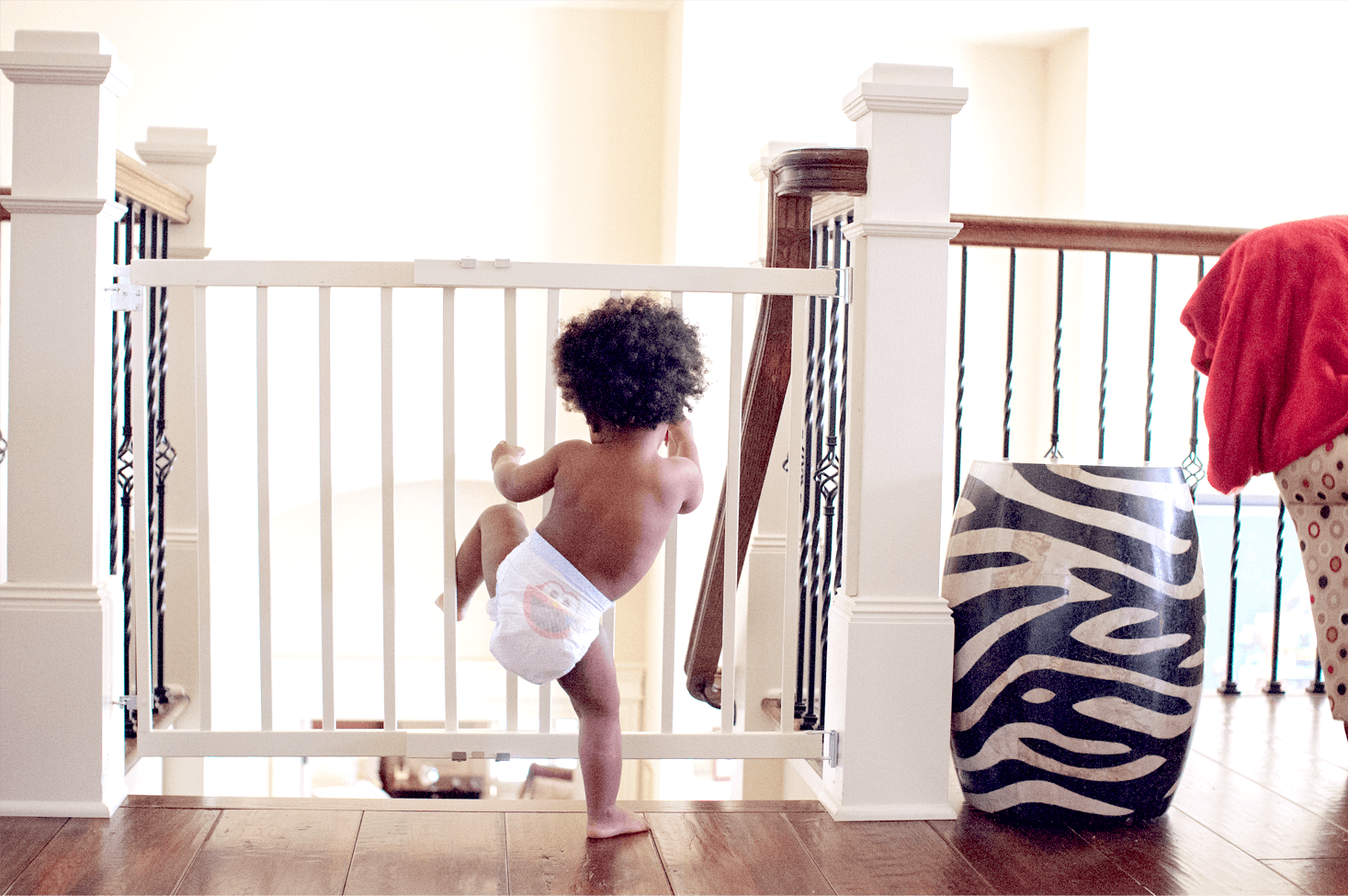
- Fit a baby gate at both the top and bottom of the stairs once your baby starts crawling. Top-of-stairs gates should be screwed to the wall rather than pressure-fitted, because pressure-fitted gates aren’t strong enough to withstand a determined toddler leaning on them at height.
- Fit door stoppers or finger guards on doors that could slam shut on little fingers, particularly in older houses with heavier doors.
- Check trailing rugs and mats in hallways don’t create a slip risk once your baby starts pulling up to walk along furniture.
The essential kit
You don’t need to buy everything on the market, but a handful of products cover most of the risk in an average home:
- Outlet covers for any socket at floor level your baby can reach.
- Cupboard and drawer locks, especially anywhere near the kitchen, bathroom, or utility area.
- Corner and edge guards for coffee tables, fireplaces, and low furniture with sharp edges.
- Anti-tip straps for bookcases, chests of drawers, and TV units.
- Stair gates, ideally hardware-mounted at the top of the stairs.
- Window locks or restrictors.
- A stove guard or hob guard.
Buy from reputable brands and check that any safety gate or lock meets current British or European safety standards. Cheap, unbranded products bought online can sometimes fail basic safety testing.
Common mistakes worth avoiding
A few things trip parents up again and again. Baby monitors and their cables get left dangling near cots, which is a strangulation risk. Handbags and changing bags get left on the floor within a toddler’s reach, often containing hand sanitiser, medication, or small items. Coin batteries in remote controls and toys are easy to miss but extremely dangerous if swallowed, so it’s worth checking anything battery-powered in the house has a securely screwed battery compartment.
It’s also easy to baby-proof the ground floor thoroughly and forget upstairs, or to sort your own home but not think about grandparents’ houses, which often haven’t been childproofed in years and can be full of hazards a young family home wouldn’t have.
Keep reassessing as your baby grows
Baby-proofing isn’t a one-off job you tick off a list. What’s safe for a six month old who can’t move far isn’t safe for a ten month old who can crawl across a room in seconds, or a fifteen month old who can climb onto a chair to reach a worktop. Walk through your home again every few months, get down to your child’s level, and look for anything new they can now reach, pull, climb, or open. Let anyone who looks after your baby, grandparents, babysitters, childminders, know what precautions you’ve put in place and why.
If you’re ever unsure about a specific safety concern, whether that’s cot safety, choking hazards, or anything else, your health visitor, midwife or GP is a good first port of call, and organisations like RoSPA and the Lullaby Trust publish up to date, evidence based guidance you can rely on.
The bottom line
Baby-proofing your home isn’t about wrapping everything in bubble wrap or stopping your child exploring. It’s about removing the genuinely dangerous stuff so your baby can crawl, climb, and investigate the world with a bit less risk and a lot more freedom, and so you can relax a little more while they do it.
Share This Story, Choose Your Platform!



Latest Post


Latest News To Your Inbox
Subscribe to hear about our latest blog posts, competitions and special offers.