
Everything You Need to Know About Starting Solids

Starting solids is a big milestone, and it’s normal to feel a mix of excitement and nerves about it. There’s a lot of conflicting advice out there, and it changes more often than you’d expect, so it’s easy to end up confused about when to start, what to offer first, and what to avoid. This guide pulls together the practical, up to date basics so you can go into it feeling prepared rather than overwhelmed. As always, if you’re unsure about anything specific to your baby, check with your GP, health visitor or paediatrician, especially if there’s a family history of allergies or your baby was born prematurely.
Why solids matter
Breast milk or formula covers your baby’s nutritional needs very well for the first six months or so, but at some point liquid feeds alone aren’t enough. Babies start needing more iron, zinc and energy than milk can provide, and their digestive system matures enough to cope with different textures. Starting solids isn’t just about topping up calories either. It’s also how babies learn to chew, move food around their mouth, handle new tastes and textures, and eventually feed themselves. All of that takes practice, which is exactly why the early weeks of weaning are messy and slow, and why “how much they actually eat” matters far less than people assume at this stage.
When to start
Most health bodies, including the NHS and the World Health Organization, recommend starting solids at around 6 months of age, alongside continued breast milk or formula. This isn’t an arbitrary number. By around six months, most babies’ iron stores from birth are starting to run low, their gut is more ready for different foods, and they’ve usually developed the physical skills needed to sit and swallow safely.
Rather than fixating on the exact date on the calendar, it helps to look for signs of readiness alongside age:
- They can hold their head steady and sit upright with little or no support.
- They’ve lost the tongue-thrust reflex that pushes food back out automatically.
- They can look at food, reach for it, and get it to their mouth.
- They show real interest in what you’re eating, not just general curiosity about everything on the table.
Starting much before 4 months isn’t recommended, as babies’ kidneys and gut aren’t ready for it and it can increase the risk of choking. If your baby is still showing none of these signs close to 6 months, or if you have any concerns about their development, it’s worth mentioning to your health visitor rather than guessing.
Purees, mashed food, or baby-led weaning?
There isn’t one “correct” way to start. Some parents begin with smooth purees on a spoon, gradually thickening them and moving to mashed and then chopped food. Others go straight for soft, graspable pieces of food that the baby feeds themselves, an approach usually called baby-led weaning. Plenty of families do a mix of both, offering purees at some meals and finger foods at others.
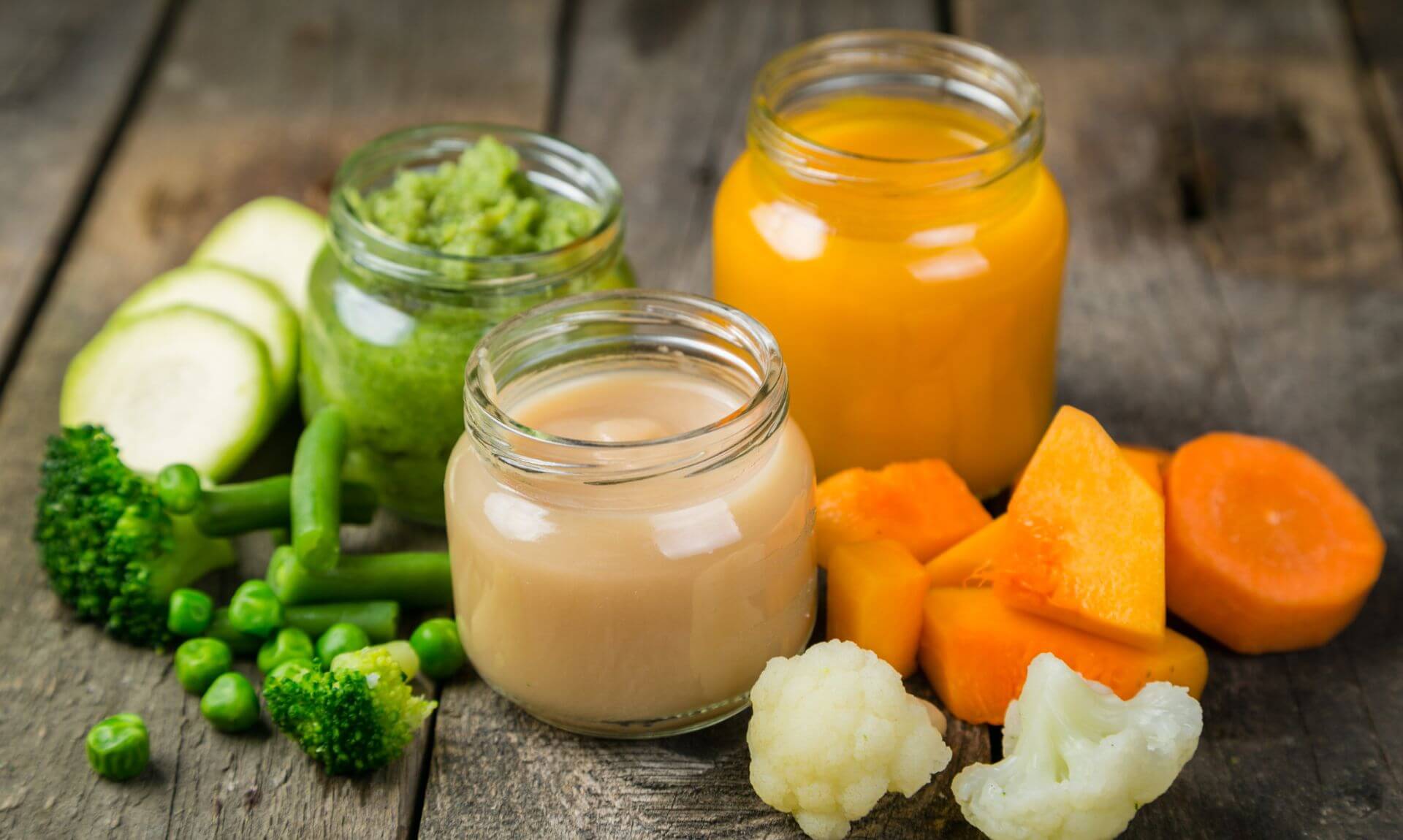
Good early foods either way include well-cooked and softened vegetables (sweet potato, carrot, broccoli), mashed or stewed soft fruit (banana, ripe pear, avocado), and iron-rich foods such as pureed or well-cooked minced meat, lentils, or mashed egg. If you’re using baby cereal, it’s fine as one option among several, but there’s no need to rely on rice cereal specifically. Rice based products can contain slightly higher levels of naturally occurring arsenic than other grains, so most guidance now suggests offering a variety of iron-fortified cereals and other iron sources rather than making rice cereal the default first food.
Whichever route you choose, foods should be soft enough to squash easily between your fingers, and pieces should be roughly finger-sized to start with, since young babies gum food at the front of their mouth rather than chewing with back teeth they don’t have yet.
Do you still need breast milk or formula?
Yes, definitely. Breast milk or formula stays the main source of nutrition for most of the first year. Solids at 6 months are about practice and gradually widening their diet, not replacing milk feeds straight away. Keep offering milk feeds as usual, and think of early solids as an extra course rather than a replacement meal. Cow’s milk can be used in cooking or mixed into food from around 6 months, but it shouldn’t become your baby’s main drink until after their first birthday, since it doesn’t contain enough iron on its own.
Building a routine
In the first few weeks, once a day is plenty, ideally at a time when your baby is alert and not overtired or ravenously hungry (a baby who’s starving will usually just want milk, fast). You can build up to two or three small meals a day over the following weeks as they get more confident.
By around 9 to 10 months, many babies settle into a rough breakfast, lunch and dinner pattern, in step with the rest of the family. Don’t expect them to eat well at every single meal though. Some days they’ll eat a decent amount, other days they’ll want two mouthfuls and then lose interest completely. That’s normal and it evens out over the week.
A simple pre-meal routine helps too: wash their hands, get them settled in the highchair, keep the TV off and distractions to a minimum, and sit with them while they eat. Babies pick up on mealtime cues quickly, and a bit of consistency here makes the whole process calmer for both of you.
Expect a mess, and watch for the “I’m done” signs
Learning to eat is a genuine skill, not something babies just know how to do. The spoon feels strange, textures feel stranger, and getting food from the bowl to their mouth takes real coordination. Hands in the food, food on the floor, more mush on the highchair tray than in their tummy, all completely normal in the early months and not a sign they dislike what you’re offering.
What’s more useful is learning to read when they’ve had enough. Turning their head away, clamping their mouth shut, pushing the spoon or bowl away, or getting distracted and fussy are all signs to wrap up the meal. Try not to encourage “just one more spoonful” once you see these cues. Babies are generally very good at self-regulating how much they eat, and pushing past their signals can work against that.
Foods to avoid and foods to be careful with
- Honey: avoid until after their first birthday. It can occasionally contain spores that cause infant botulism, which babies’ digestive systems aren’t yet equipped to deal with.
- Salt and added sugar: babies’ kidneys can’t process much salt, so avoid adding it to their food and be cautious with salty foods like stock cubes, cured meats, or ready-made sauces. There’s no need for added sugar either.
- Whole nuts, popcorn, hard raw vegetables, whole grapes, chunks of hard fruit: these are choking hazards for babies and young toddlers. Nut butters and finely ground nuts mixed into food are fine from 6 months and are actually a recommended way to introduce peanut safely.
- Cow’s milk as a main drink: fine in small amounts in cooking or on cereal from 6 months, but shouldn’t replace breast milk or formula as the main drink before 12 months.
- Unpasteurised or high-mercury foods: avoid unpasteurised soft cheeses and limit high-mercury fish like shark, swordfish and marlin.
You’ll sometimes see citrus fruit listed as something to avoid because it’s “too acidic.” In reality, there’s no strong evidence it needs to be avoided, and it’s fine to offer from 6 months. Some babies do get a mild rash around the mouth from acidic foods like tomato or orange, but this is usually just skin irritation from contact, not an allergic reaction, and it clears up once you wipe the area. If you’re ever unsure whether something is a mild irritation or a true reaction, check with your GP or health visitor.
What about allergies?
Guidance on this has actually shifted quite a bit in recent years. Rather than delaying common allergenic foods like peanut, egg, wheat, and dairy, current advice generally supports introducing them early, from around 6 months, one at a time, in small amounts, and watching for any reaction over the following couple of days before trying another new food. Delaying these foods doesn’t appear to reduce the risk of allergy and may make it worse for some babies. If your baby has severe eczema, an existing food allergy, or a close family history of food allergy, talk to your GP or health visitor before introducing allergenic foods, as they may want to guide you on how and when to do this safely.
Textures and rough timings
Every baby moves through textures at their own pace, but as a general guide:
- Around 6 months: smooth purees or very soft, squashable finger foods.
- 7 to 9 months: thicker mashed food with some soft lumps, and finger foods like soft cooked vegetable sticks, ripe fruit, and toast.
- 9 to 12 months: chopped, minced or shredded food closer to what the rest of the family eats, moving towards three meals a day alongside milk feeds.
If your baby seems to need longer at any stage, that’s fine. There’s no prize for reaching lumpy food fastest, and pushing textures before a baby is ready can actually make them more resistant to lumps later on.
Common pitfalls
- Rushing texture progression: moving to solid pieces too fast, before your baby has had practice with softer textures, tends to backfire and can lead to gagging or refusal.
- Introducing too many new foods at once: stick to one new food at a time for a few days when you’re introducing potential allergens, so you know exactly what caused a reaction if one shows up.
- Forcing food: if your baby refuses something, leave it and try again another day rather than pushing. Repeated, pressure-free exposure works far better than persistence in the moment.
- Forgetting milk feeds: solids don’t replace breast milk or formula in the first year, so keep offering milk feeds as normal even as meals increase.
Final thoughts
Every baby takes to solids differently. Some will happily eat whatever’s put in front of them from day one, others take weeks to get past a few licks and a lot of squished food on the tray. Both are completely normal. Try to keep mealtimes relaxed, offer a wide range of foods and textures over time, and don’t judge progress by any single meal.
If you’re worried about anything, whether it’s gagging versus choking, slow weight gain, suspected allergic reactions, or your baby refusing solids altogether past 7 or 8 months, speak to your health visitor or GP rather than waiting it out. They’ll be able to tell you what’s normal variation and what’s worth a closer look.
Share This Story, Choose Your Platform!


Latest Post


Latest News To Your Inbox
Subscribe to hear about our latest blog posts, competitions and special offers.