
Fun Developmental Activities For Babies
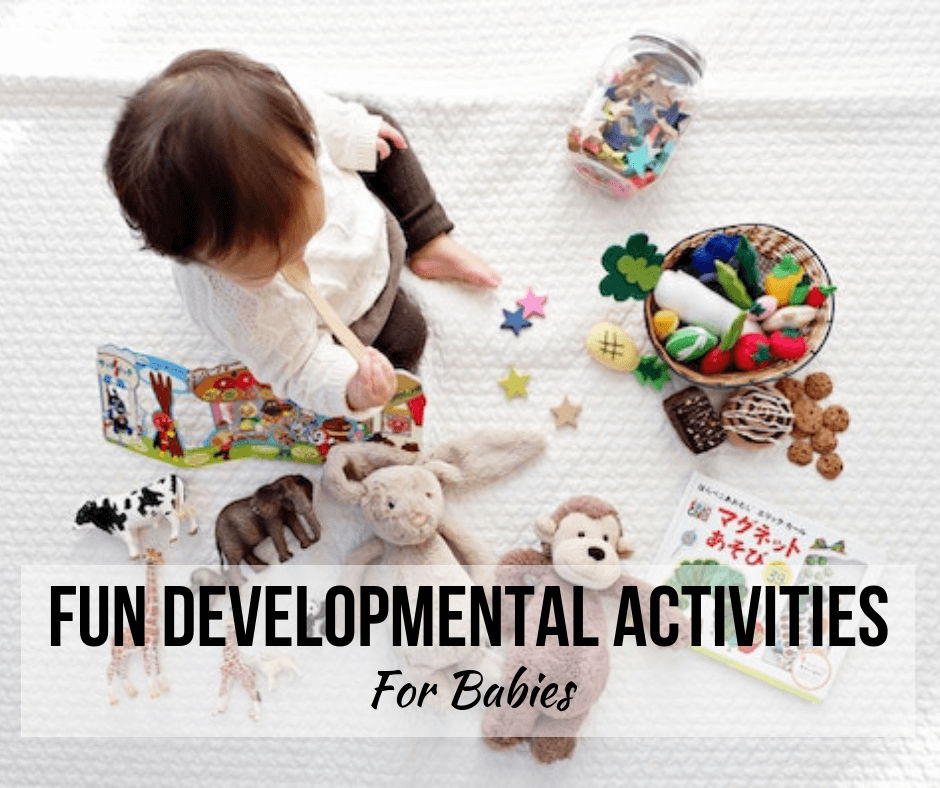
Every baby develops at their own pace, and there’s a huge amount of normal variation in when babies roll, sit, babble or wave. That said, the everyday things you do together, the games, the songs, the silly faces, genuinely do help. Babies learn through repetition and interaction, and most of what builds their brains and bodies in the first year happens through ordinary play rather than expensive toys or flashcards. Below are some activities that are simple to do at home, along with why they help and a few practical pointers so you can get the most out of them.
If you ever have concerns about your baby’s development, whether it’s movement, hearing, vision or communication, it’s always worth having a chat with your health visitor or GP rather than waiting to see if things sort themselves out.
Tummy Time: Building Neck, Shoulder and Core Strength
It’s worth being clear on what tummy time actually does. Placing babies on their back to sleep is what reduces the risk of Sudden Infant Death Syndrome (SIDS), and that guidance hasn’t changed. Tummy time is a completely separate thing: it’s supervised playtime on the tummy while your baby is awake, and its job is to build the neck, shoulder and core strength babies need before they can lift their head, roll, sit and eventually crawl.
Start with just a minute or two, a few times a day, from the first week or so, ideally on a firm surface like a play mat rather than a soft bed or sofa. Some newborns hate it at first, and that’s normal. Try it straight after a nappy change, or lie down face to face with your baby on your chest so they have a reason to lift their head and look at you. As they get stronger, usually by three or four months, you can build up to longer stretches. Always supervise tummy time, and stop if your baby seems distressed rather than pushing through it.
Dancing and Movement
Holding your baby securely and swaying or dancing to music does more than look sweet on video. It gives babies practice with balance, rhythm and the sensation of movement, and it’s a lovely way to introduce different tempos and styles of music. Support their head and neck if they’re very young, and keep movements gentle and predictable rather than bouncy or jerky, especially in the first few months.
Peek-a-Boo and Other Connection Games
Peek-a-boo works well from around four to six months, once babies start to grasp that things (and people) still exist even when they can’t see them, a concept called object permanence. Cover your face with your hands or a muslin, then reveal it with a cheerful “there you are!” The anticipation and surprise is what makes babies laugh, and over time you’ll see them start to pull the cloth away themselves or copy your sounds, which is an early step towards turn-taking in conversation.
Singing and Nursery Rhymes
Singing is genuinely useful, not just charming. Babies respond to the rhythm and pitch of a familiar voice long before they understand words, and simple, repetitive songs help them tune into the sounds that make up language. Nursery rhymes with actions, like “Row, Row, Row Your Boat” or “Wind the Bobbin Up,” add a physical element too. You don’t need to sing well. Your baby isn’t judging your pitch, they’re responding to your voice and your attention.
Face and Body Exploration
Let your baby touch your face, their own face, and the faces of soft toys, and name each part as they do: “that’s your nose,” “there’s mummy’s chin.” This is a simple way to build vocabulary and body awareness at the same time, and babies often find faces (real ones, not just pictures) more interesting than almost anything else in the room. From around six months you can extend this into games like touching noses or gently tapping tummies while naming the part.
Baby Massage
A gentle massage after a bath or before bed can help some babies settle, and it’s a nice way to build in calm, focused touch time. Use a small amount of plain, unscented baby oil or lotion (check with your health visitor if you’re unsure what’s suitable, particularly for babies with eczema or very dry skin), and use light, firm strokes on the legs, arms and back rather than the tummy, which can be more sensitive. Keep the room warm, watch your baby’s cues, and stop if they seem unsettled rather than relaxed.
Playing With Boxes and Household Objects
You genuinely don’t need expensive toys for a lot of this. Cardboard boxes, plastic tubs, wooden spoons and stacking cups are brilliant for babies from around six months. Let them bang, stack, knock over and post objects into a box, which supports fine motor skills, hand-eye coordination and early cause-and-effect understanding (I did this, and that happened). Just check boxes for staples or sharp edges first, and remove any loose plastic wrapping, ribbon or small parts that could be a choking hazard before you hand them over.
Follow the Leader and Imitation Games
Babies are wired to copy the people around them, which is one of the main ways they learn. From around six to nine months, try simple actions like clapping, waving, blowing raspberries or opening and closing your hands, and see if your baby copies you. If they don’t at first, keep it light and try again another day. Imitation games like this support memory, social understanding and, later on, the ability to copy sounds and words.
Picture Cards for Language and Memory
Simple photos of family members, pets or familiar objects work well from around nine months onwards. Hold up a photo, say the name clearly (“that’s grandad”), and pause to give your baby a chance to look, point or babble in response. This builds early vocabulary and helps babies connect a face or object with a specific word, which is a real step towards their first proper words.
Visual Tracking Games
From the earliest weeks, babies’ eyesight is still developing, and they see contrast and movement more easily than fine detail or distance. Hold a bright toy or your face about 20 to 30cm away and move it slowly side to side, watching to see if your baby’s eyes (and eventually their head) follow it. This supports visual tracking, which matters for later skills like reading and hand-eye coordination. If you notice your baby’s eyes aren’t following objects by around three months, or one eye seems to wander consistently past that age, mention it to your health visitor or GP.
Water Play
Water is fascinating to most babies, and you don’t need a paddling pool to make the most of it. A shallow plastic tub with a couple of inches of warm water, some baby-safe bath toys and no soap is enough. Pouring, splashing and watching objects float or sink all support sensory development and early problem-solving. The one rule that really matters here: never leave a baby alone near water, even a small amount, even for a few seconds. Stay within arm’s reach the whole time.
The “Find It” Game
This one works well from around nine to twelve months, once babies are sitting confidently, ideally in a highchair so their hands are free. Show them a small toy, cover it with a muslin or washcloth while they watch, and see if they pull the cloth away to find it. This is a lovely, low-pressure way to see object permanence and problem-solving in action, and most babies find the “reveal” genuinely funny.
Pointing and Naming
Pointing at things and naming them as you go about your day, “look, a dog,” “there’s your cup,” is one of the simplest and most effective ways to build vocabulary. Babies typically start to point themselves somewhere between nine and fourteen months, often as a way of asking you to name something for them. Following their point and responding (“yes, that’s the cat”) reinforces that communication is a two-way thing, which matters just as much as the words themselves.
A Few Honest Notes
None of these activities are magic, and skipping a day (or a week) won’t set your baby back. What seems to matter most is fairly ordinary: babies who get regular back-and-forth interaction, a mix of movement and quiet time, and caregivers who respond to their cues tend to do well. You know your baby better than any article can, so follow their lead, drop anything they don’t enjoy, and don’t feel you need to tick every box every day.
If you’re ever worried that your baby isn’t moving, babbling, making eye contact or responding the way you’d expect for their age, trust that instinct and get it checked. Health visitors see thousands of babies and would always rather reassure an anxious parent than miss something worth catching early.
Share This Story, Choose Your Platform!


Latest Post


Latest News To Your Inbox
Subscribe to hear about our latest blog posts, competitions and special offers.