
Got Breastfeeding Stress? Give Laid Back Breastfeeding a Shot!

If breastfeeding feels like a puzzle you can’t quite solve, you’re not alone. So much advice out there focuses on getting the “perfect” hold, the “perfect” angle, the “perfect” latch, and it can leave you feeling like you’re failing before you’ve even really started. Laid back breastfeeding takes a different approach, and for a lot of mums it takes the pressure off almost immediately.
It’s also known as biological nurturing, a term used by researchers who studied how a mother’s reclined position can trigger a baby’s own natural feeding reflexes. Instead of you positioning your baby just right, you let gravity and your baby’s instincts do most of the work. There’s no special kit needed, and it works whatever your shape, size or breast size. If you’ve been struggling with the more “textbook” holds, this is well worth trying before you assume something is wrong.
What Is Laid Back Breastfeeding?
When you’re trying to get everything “right” (the angle of your baby’s head, how your hand is shaped around your breast, whether your baby’s ear, shoulder and hip are lined up) it’s easy to tense up. That tension often makes latching harder, not easier. Some mums get so worn down by the struggle that they give up breastfeeding altogether, and often feel guilty about it afterwards, even though there was nothing wrong with them or their milk supply.
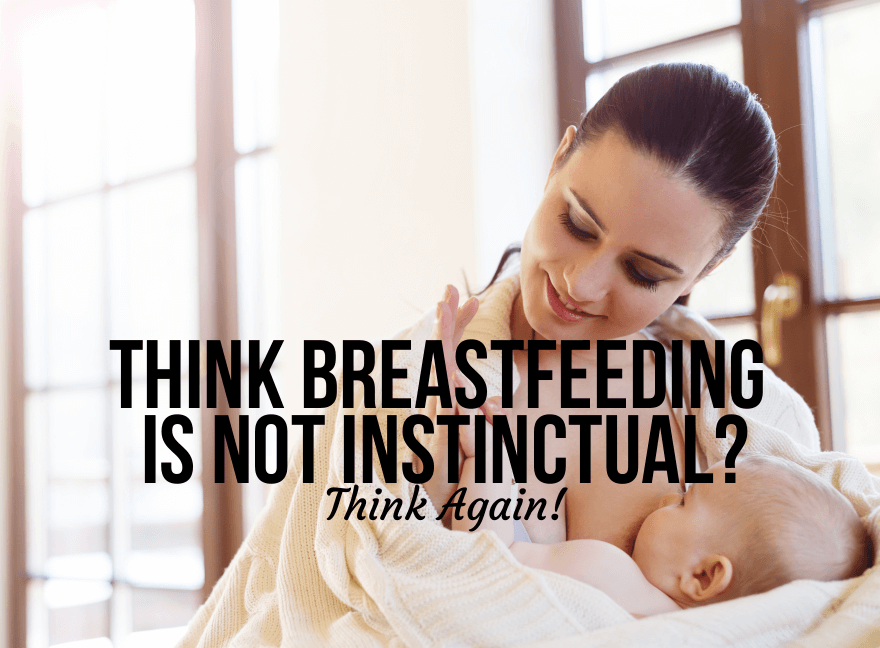
Laid back breastfeeding removes a lot of that mechanics-focused stress. You recline rather than sit bolt upright, your baby lies front-down against you, and their own rooting reflex takes over. You support and guide when needed, but you’re not doing all the engineering yourself.

How to try it
Find a comfortable reclined position, on the sofa, propped up in bed, or in a reclining chair, at roughly a 45 degree angle. You want your shoulders and hips supported so you’re not straining. Lay your baby tummy-down on your chest, skin to skin if you can, with their head near your breast rather than centred on your chest. Let them settle. Most babies will start to bob their head, root around and eventually latch on themselves, sometimes after a few minutes of shuffling about. You can offer light support to your baby’s back and shoulders, but try not to steer their head. If your baby is really struggling to find the nipple after a few attempts, it’s fine to guide gently, or ask a midwife, health visitor or lactation consultant to watch a feed and check things over.
Common Breastfeeding Positions
Laid back breastfeeding is one option among several, and most breastfeeding mums end up using more than one position depending on the day, their baby’s age, and how they’re feeling physically. It’s worth knowing the main ones so you can find what actually suits you, rather than sticking rigidly to whatever you were shown first.
Football (Rugby) Hold
This one is often recommended for mums recovering from a caesarean, since your baby’s weight sits beside you rather than across your tummy.

- Your baby is tucked under your arm on one side, facing you, legs pointing towards your back.
- You support their head and shoulders with the hand nearest that side, and shape your breast with the other hand if needed.
- It can feel like a lot to manage at first, balancing your baby’s position with one arm while shaping the breast with the other.
Worth knowing: a couple of firm pillows under your baby, or a nursing pillow if you have one, makes this position much easier to hold for any length of time.
Cradle Hold
Probably the most recognisable breastfeeding position, and often the first one shown to new mums in hospital.

- Your baby lies on their side, tummy to tummy with you, head resting in the crook of your elbow.
- Your free hand can support your baby’s back or shape your breast.
- You’ll usually need to raise your baby up to breast height with pillows, rather than leaning down to them, which helps protect your back and neck.
Worth knowing: if you have larger breasts, this position can be trickier because it’s harder to see what your baby is doing and get a good angle. The cross-cradle or laid back position are often easier alternatives.
Cross-Cradle Hold
Similar to the cradle hold but with a bit more control over your baby’s head, which can help in the early days while you’re both learning.

- Your baby lies tummy to tummy with you, but their head rests in the palm of your hand rather than your elbow.
- Their body tucks along your forearm and under your other arm.
- As babies get bigger and stronger, they often resist being held this way, so it tends to work best in the newborn weeks.
Worth knowing: this position can put pressure across your tummy, so it isn’t always comfortable if you’ve had a caesarean and are still healing.
Side-Lying Position
A good option for night feeds or when you’re sore and don’t want to sit up.

- You and your baby both lie on your sides, facing each other, tummy to tummy.
- Your baby feeds from the breast nearest the mattress.
Worth knowing: this is popular with mums who bedshare or feed lying down at night, but it’s worth following safe sleep guidance carefully. Feed on a firm mattress, keep pillows and loose bedding away from your baby’s face, and if you think you might fall asleep, move your baby to their own safe sleep space afterwards rather than leaving them beside you unsupervised. If you’re unsure what’s safe in your situation, ask your health visitor or midwife.
Laid Back (Biological Nurturing) Position
The position this article is really about, and increasingly recommended by lactation consultants for its simplicity.
- You recline rather than sit upright, in whatever angle feels comfortable, and lay your baby against your front, tummy to tummy.
- Your baby’s own rooting reflex takes over, and they’ll typically bob and search their way to the breast.
- Because gravity is doing the work of holding your baby against you, this tends to suit mums of any size and shape, and any breast size.
Worth knowing: this position also happens to be great for skin to skin time, which can help with milk supply and bonding in the early weeks.
What About Baby’s Latch?
A good latch matters. If your baby is poorly latched, you’re more likely to get sore or cracked nipples, and your baby may not be draining the breast well, which can affect both your supply and their weight gain. Signs of a good latch generally include your baby’s mouth open wide with lips flanged outwards, more of the areola visible above their top lip than below their bottom lip, and rhythmic sucking and swallowing rather than just fast, shallow sucks.
With laid back breastfeeding, many mums find their baby reaches a deep, comfortable latch more easily, simply because the baby is doing the approaching rather than being placed. That said, it doesn’t guarantee a perfect latch every time, and it’s not a substitute for getting help if feeding is painful. If you’re getting pain that doesn’t ease after the first minute or so of a feed, or you notice cracked, bleeding nipples, or your baby doesn’t seem satisfied after feeds, get it checked by a midwife, health visitor or breastfeeding specialist. Ongoing pain isn’t something you should just have to put up with.
Do You Need Any Special Equipment?
You really don’t need much. Breastfeeding worked long before nursing pillows and specialist gear existed, and plenty of mums manage perfectly well with nothing but themselves, their baby and somewhere comfortable to sit or lie.
That said, a few bits of kit can make things more comfortable, particularly in the early weeks when you’re sore, tired, and feeding often:
- A firm cushion or two behind your back and under your arms if you’re reclining on a bed or sofa.
- A nursing pillow, if you find the cradle or cross-cradle holds easier with extra height and support.
- A muslin or light cover, purely if you want a bit of privacy, not because it’s necessary for feeding to work.
None of this is essential. If you’d rather save the money, you can absolutely manage with pillows you already have at home.
Benefits of Laid Back Breastfeeding
There isn’t one “correct” way to breastfeed, but a lot of mums find the laid back position genuinely easier to sustain, especially in the newborn stage. Some of the real advantages include:
- You’re physically more comfortable, since you can recline in whatever way suits your body.
- Your baby’s own reflexes do more of the work, so you’re not forcing a latch.
- Many babies achieve a deeper, more comfortable latch this way, which can mean less nipple soreness.
- It puts less strain on your back, shoulders and arms than sitting upright and holding a baby out in front of you.
- It’s easier on a healing body, particularly after a caesarean, tearing, or a difficult delivery.
- It naturally encourages skin to skin contact, which can support bonding and milk supply.
- You can do it almost anywhere you can lean back, a sofa, a bed, a reclining car seat at a stop.
- There’s no “correct” hold to master, which takes a lot of the pressure off in those first exhausting weeks.
Give It a Try
If breastfeeding has felt like a battle so far, laid back breastfeeding might be worth trying before you assume something’s wrong with you or your baby. Get yourself into a comfortable reclined position, wear whatever lets you get skin to skin, and let your baby’s instincts do the finding. You can offer gentle guidance if they seem lost, but you don’t need to manage every part of it.
It won’t work miracles for every feeding difficulty, and if you’re dealing with ongoing pain, slow weight gain, or a suspected tongue-tie, it’s still worth speaking to your midwife, health visitor or a lactation consultant. But for a lot of mums, taking the pressure off and letting things be a bit more instinctive is exactly what turns a stressful feed into a calm one.
Have you tried laid back breastfeeding? We’d love to hear how it went for you in the comments.
Share This Story, Choose Your Platform!


Latest Post


Latest News To Your Inbox
Subscribe to hear about our latest blog posts, competitions and special offers.