
The Importance of Finger Foods for Baby

By the time your baby is a few months into solids, you’ve probably watched them gum a bit of puree off a spoon and wondered what comes next. A lot of parents ask the same question around this stage: when is it actually safe to hand your baby food they can pick up themselves? The short answer is that finger foods aren’t just safe when introduced sensibly, they’re a genuinely important part of learning to eat. But because every baby develops at their own pace, it’s worth checking with your health visitor, GP or paediatrician before you get started, especially if your baby was premature or has any feeding or medical concerns.
When can babies start finger foods?
Most babies are ready to try finger foods somewhere between six and nine months, often not long after solids are first introduced (in the UK, weaning generally starts around six months). Some families move straight into offering soft, graspable pieces of food from the very start of weaning rather than beginning with purees. This approach is usually called baby-led weaning, and it can support hand-eye coordination and independent chewing skills from early on.
Rather than fixing on an exact age, it helps to look at what your baby can actually do. Signs a baby is ready for finger foods include:
- Sitting upright with good head control, ideally in a highchair with a tray, rather than being propped up
- Bringing objects (or their own hands) to their mouth with reasonable accuracy
- Showing an early pincer grasp, using thumb and forefinger together, rather than only a whole-hand swipe
- Showing interest in what’s on your plate and opening their mouth as food comes towards them
A baby doesn’t need any teeth to manage finger foods. Gums are surprisingly effective at mashing soft, well-cooked food, and front teeth are mainly for biting rather than chewing anyway.

Why finger foods matter, not just for nutrition
At this stage, breastmilk or formula is still doing most of the nutritional heavy lifting. Finger foods are less about calories and more about giving your baby the chance to explore. Letting them squash a piece of banana, post a chunk of soft carrot around a tray, or smear avocado across their own face is doing real developmental work, even when it looks like mess for mess’s sake.
Fine motor skills
Picking up small pieces of food, working out how to get them from the tray to the mouth, and refining that pincer grasp all help build the hand control your baby will later use for things like holding a spoon, a crayon, or a shoelace.
Oral motor development
Chewing (even without teeth) builds jaw strength and teaches the tongue to move food from side to side, not just back and forth as it does with sucking and swallowing purees. This side-to-side tongue movement is an important step towards managing more textured food later on, and towards clear speech further down the line.
Sensory learning
Your baby is taking in far more than taste. They’re noticing texture, temperature, smell and how food looks and feels in their hands before it even reaches their mouth. This sensory input helps the brain build associations around food, which can make babies more open to trying new textures and flavours as they get older, rather than sticking rigidly to smooth purees.
Learning the difference between gagging and choking
Almost all babies have a strong gag reflex when they start solids, and it sits quite far forward in the mouth. This is completely normal and is actually protective. It’s not a sign of choking. As babies get more practice moving food around their mouths, the gag reflex naturally moves further back and becomes less sensitive. Gagging usually looks noisy: your baby might cough, splutter, retch or even bring food back up, but they’ll still be able to breathe and often carry on trying again. Choking is different and much more serious: it’s usually silent, or the baby may make a high-pitched noise, and they won’t be able to cough, cry or breathe properly. If you’re ever unsure of the difference, it’s worth attending a baby first aid course, many local NHS trusts, St John Ambulance and the British Red Cross run these, and knowing what to do can make you feel far calmer at mealtimes.
Keeping finger foods safe
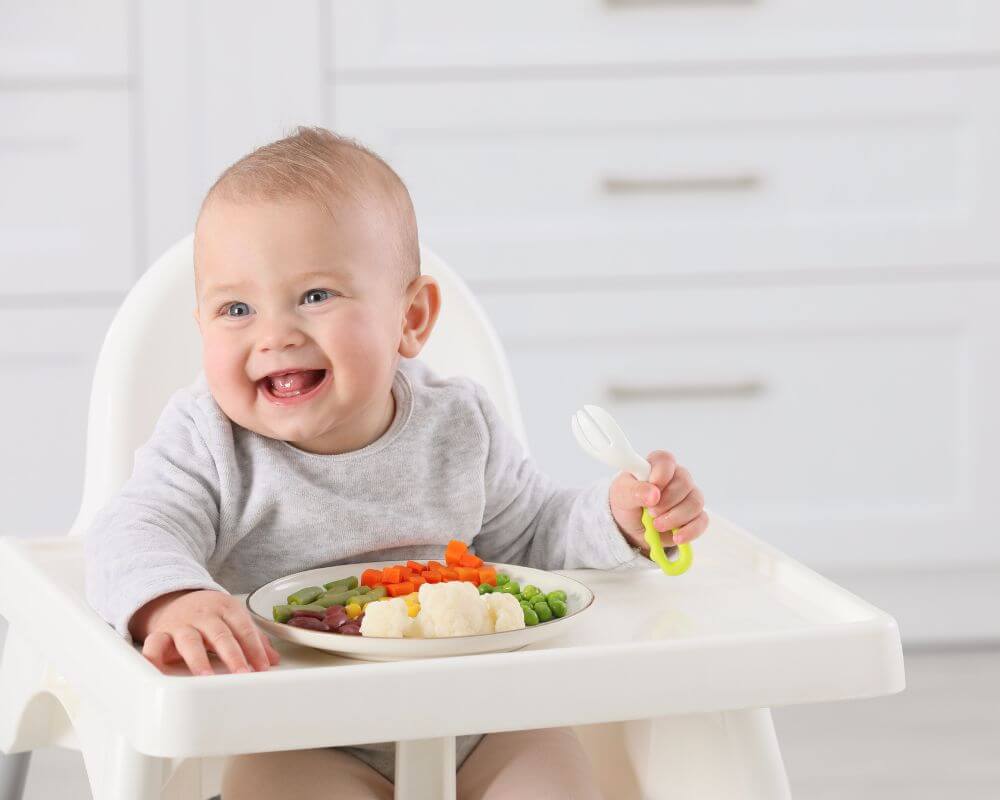
Always supervise your baby while they eat, sitting upright, not lying back or slumped. Foods should be soft enough to squash easily between your fingers, or cut into pieces long enough for a baby to hold in their fist with some sticking out (roughly the size of an adult finger), rather than small round chunks that are harder to manage and easier to choke on.
Certain foods are known choking risks for babies and toddlers and should be avoided or adapted:
- Whole nuts and seeds (ground nuts or smooth nut butter spread thinly are fine from around six months, unless there’s a known allergy risk)
- Whole grapes, cherry tomatoes and blueberries, unless cut into quarters
- Raw hard vegetables like carrot or celery sticks, better cooked until soft, or grated raw
- Chunks of apple, better grated, cooked soft, or cut into thin slices rather than cubes
- Popcorn, hard sweets, and whole marshmallows
- Honey, which shouldn’t be given to babies under 12 months because of the small risk of infant botulism
Guidance on choking hazards can vary slightly between countries, so it’s worth checking current advice from a source like the NHS, your health visitor, or a paediatric dietitian if you’re not sure about a particular food.
Simple finger food ideas by age and stage
For younger babies just starting out (around six to eight months), stick to soft, easy-to-squash pieces:
- Steamed sweet potato or butternut squash wedges
- Ripe banana or avocado, cut into thick strips
- Well-cooked broccoli florets or green beans
- Soft-cooked pear or apple slices
- Toast fingers with a thin spread of cream cheese or mashed avocado
Once your baby has a bit more practice (around nine to twelve months) and is chewing confidently, you can move on to:
- Small pieces of roast chicken or soft cooked fish (check carefully for bones)
- Cheese omelette strips
- Pasta shapes with a mild sauce
- Grated or thinly sliced cheddar cheese
- Ripe soft fruits like peach, mango or quartered grapes
- Fingers of pancake or French toast
A useful trick is to pair a familiar food with something new, for example banana alongside a first taste of avocado, so your baby has one thing they already like on the tray while they investigate the other. Steaming, roasting or boiling vegetables and fruit until they’re soft enough to mash with a fork usually gets the texture right for beginners.
A word on mess and pace
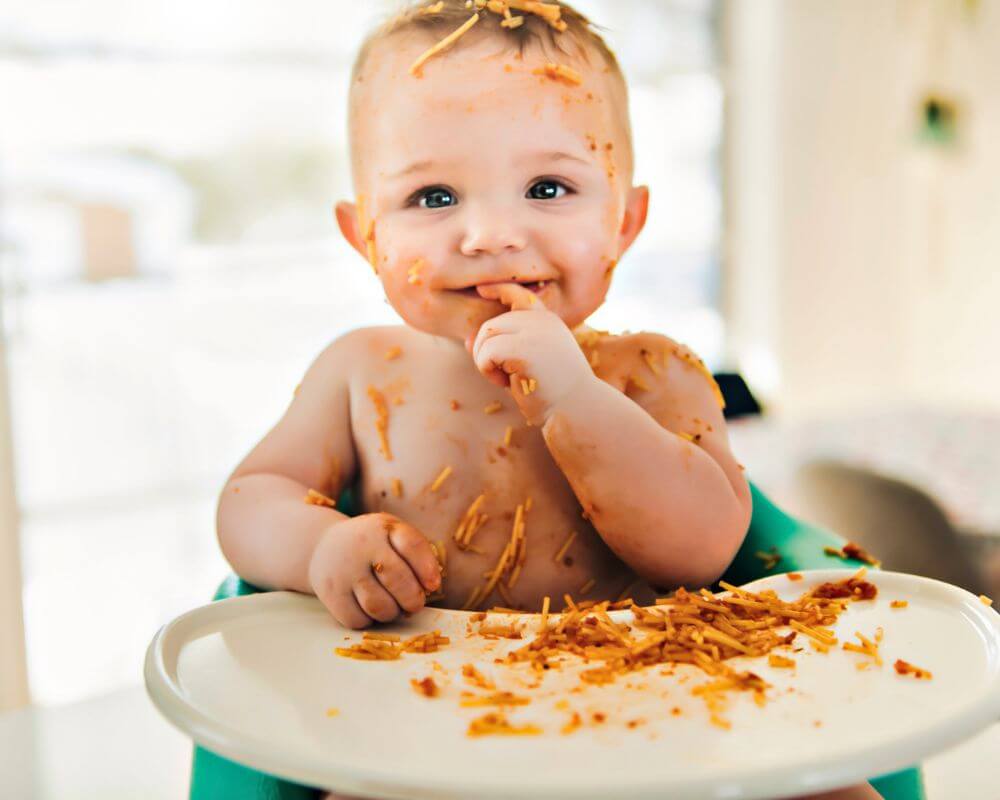
Expect a lot of food to end up on the floor, in the hair, and squashed into the highchair tray before much of it makes it into your baby’s mouth, and that’s completely normal in the early weeks. Try not to judge progress by how much they’ve actually eaten. At this stage it’s about practice, not portion size. A splash mat or an old shower curtain under the highchair saves a lot of cleaning up, and a long-sleeved bib helps too.
Every baby moves through this at their own pace, and some take to finger foods faster than others. If you’re worried about gagging, slow progress, or your baby refusing most textures, it’s always worth a chat with your health visitor or GP rather than guessing. But for most babies, offering a variety of soft, safely prepared finger foods alongside their milk feeds is one of the best things you can do to help them become confident, independent eaters.
What finger foods has your baby taken to best? We’d love to hear what’s worked in your house.
If you enjoyed this article, read on:
Share This Story, Choose Your Platform!

Latest Post

Latest News To Your Inbox
Subscribe to hear about our latest blog posts, competitions and special offers.