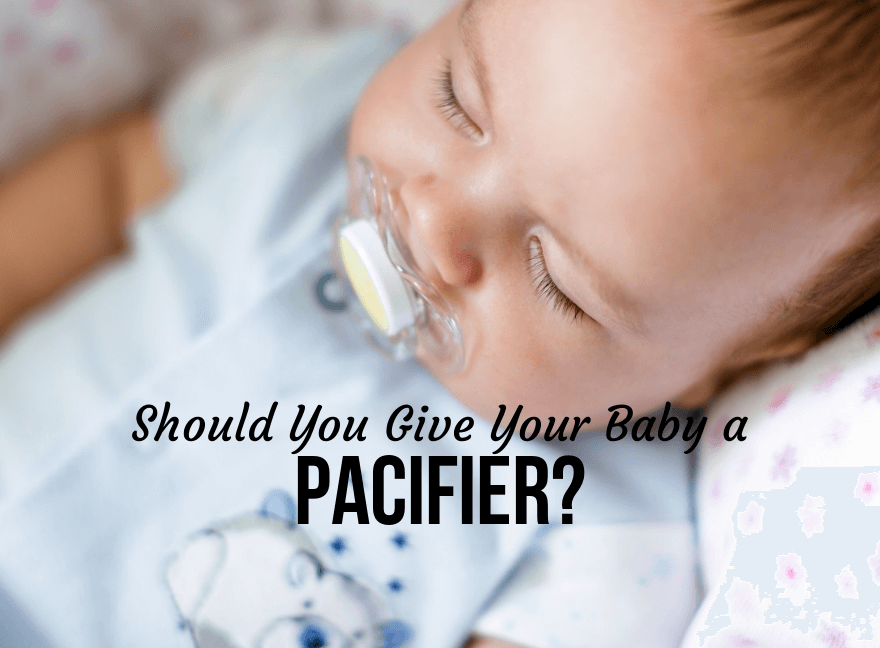
PACIFIED: What you need to know about the benefits of a pacifier

Pacifiers get a mixed reception in parenting circles. Some parents swear by them as the thing that finally got their baby to sleep through a car journey. Others worry about dental problems, speech issues, or creating a habit they’ll spend years trying to break. The truth, as usual, sits somewhere in the middle: pacifiers have real, evidence backed benefits, but they come with a few genuine caveats worth knowing before you hand one over.
What a pacifier actually does
Babies are born with a strong sucking reflex. It’s not just about feeding, sucking also helps them settle, self regulate and cope with stress. A pacifier (also called a dummy, soother or binky depending on where you live) gives your baby somewhere to put that reflex when they’re not actually hungry.
That’s the whole point of it, really. It’s not a substitute for feeding, comfort from you, or attention when your baby needs it. It’s a tool that can help in specific situations, and knowing when those situations are makes a big difference to whether the pacifier ends up helping or becoming a source of stress for you both.
The genuine benefits
Reduced risk of SIDS
This is the one piece of pacifier advice with the strongest backing behind it. Health bodies including the American Academy of Pediatrics recommend offering a pacifier at naptime and bedtime for the first six to twelve months, as there’s good evidence it’s associated with a lower risk of sudden infant death syndrome. Nobody fully understands why, one theory is that sucking keeps the airway slightly more open and prevents babies sleeping too deeply. Whatever the reason, this is worth knowing if you’ve been on the fence about pacifiers purely for sleep safety reasons. If your baby refuses one, don’t force it, and don’t reinsert it once your baby has fallen asleep and it’s fallen out. It’s a “nice if it works” measure, not something to stress over if it doesn’t.
Settling and soothing
For a lot of babies, a pacifier genuinely takes the edge off fussiness. It won’t fix hunger, a wet nappy, or wanting to be picked up, but for the kind of low level grizzling that happens in the car, at the shops, or during the witching hour in the evening, it can buy you a bit of calm.
Pain distraction
Sucking has a mildly distracting, soothing effect during things like vaccinations or blood tests. Some hospitals actually offer a pacifier (sometimes dipped in a small amount of sugar water, given by staff, not something to try yourself at home) during procedures for exactly this reason.
Something to do at bedtime that isn’t you
A pacifier can become part of a wind down routine, giving your baby a way to self soothe that doesn’t always require rocking, feeding or being held. This can be a genuine help for exhausted parents, though it’s worth knowing that many babies still wake and cry if the pacifier falls out mid sleep, so it’s not a guaranteed sleep fix for every child.
The concerns, and what’s actually true
Nipple confusion
If you’re breastfeeding, you’ll often hear that pacifiers cause “nipple confusion”, where a baby struggles to latch properly after sucking on an artificial nipple. The evidence on this is genuinely mixed. Some research finds no real link once breastfeeding is going well, other studies suggest a possible connection in the very early weeks. The usual, sensible advice is to hold off on introducing a pacifier until breastfeeding is well established, generally around three to four weeks, so you’re not adding another variable while you’re both still learning. If you’re formula feeding, this isn’t really a concern either way. If breastfeeding is proving difficult, it’s worth talking to a midwife, health visitor or lactation consultant rather than guessing whether the pacifier is the cause.
Dental health
This one is legitimate, but the timing matters more than people think. Pacifier use in infancy isn’t the issue. Prolonged use, especially daily use past the age of two or three, is what’s linked to problems like an open bite, teeth that don’t meet properly, or a narrower palate. The good news is that most of these changes reverse on their own once the habit stops, particularly if it stops before permanent teeth start coming through. If you’re worried, your dentist or health visitor can take a look and tell you whether it’s something to actively address or just keep an eye on.
Dependency
Some babies use a pacifier occasionally and drop it without any fuss. Others get genuinely attached and it becomes their main way of calming down, which can mean more tears when it’s lost, forgotten, or taken away. This isn’t a sign you’ve done anything wrong, some babies just have a stronger sucking need than others. It does mean it’s worth thinking early on about limiting when and where you offer it (sleep and travel rather than all day, every day) so it doesn’t become the only tool in the box.
Speech and ear infections
Two things worth a brief mention. Frequent, prolonged pacifier use during the day, once a child is talking, may interfere slightly with speech sound development, since it’s harder to babble and experiment with sounds around a pacifier. And some research links heavy daytime pacifier use with a slightly higher rate of ear infections, likely because sucking can affect pressure in the middle ear. Neither is a reason to panic, but they’re both arguments for using the pacifier mainly for sleep and settling rather than as a constant daytime accessory.
Introducing a pacifier
If breastfeeding, wait until it’s well established, usually around three to four weeks, before offering one. Pick a calm moment, not when your baby is already hungry or overtired and wants a feed, not a distraction. Some babies take to it instantly. Others spit it straight out every time, sometimes for weeks, before deciding they like it, or never taking to it at all. Both are completely normal. There’s no benefit to forcing the issue.
Using pacifiers safely
A few non negotiables here, since this is where safety actually matters:
- Choose one piece designs where possible. They’re less likely to break apart into small pieces than pacifiers with a separate nipple and shield.
- Check it regularly. Look for cracks, tears, stickiness or discolouration in the rubber or silicone, and throw it out and replace it if you see any. A damaged pacifier is a choking hazard.
- Never attach it with a cord, ribbon or string around your baby’s neck or to the cot. This is a genuine strangulation risk. If you want a clip to stop it getting lost, use a short clip designed for that purpose and only when your baby is being held or supervised, not left attached in the cot.
- Never dip it in honey or sugar at home. Honey should never be given to babies under 12 months because of the risk of infant botulism, and sugar coating just encourages tooth decay once teeth come through.
- Clean it properly, especially in the early months. Sterilising is generally recommended for newborns. As your baby gets older and their immune system develops, washing with soap and hot water is usually enough, though follow the manufacturer’s guidance and check with your health visitor if you’re unsure.
- Get the size right. Pacifiers are sized by age for a reason, a nipple too large or small for your baby’s mouth isn’t just less effective, it can also be less safe.
When and how to stop
There’s no single correct age to give up the pacifier, despite what you might read. The main safety recommendation (offering one at sleep times) really only applies for the first six to twelve months, tied to SIDS risk reduction. After that, it becomes much more about your family’s preference and, later, about dental and speech considerations.
Many parents choose to start winding things down somewhere between 12 months and two years, largely because it tends to be easier before a toddler has strong opinions about it. If you’re aiming to stop by age two to three, particularly before permanent teeth are on the way, that lines up well with the dental advice above. Ways that tend to help:
- Narrow it down first. Restrict use to naps and bedtime before cutting it out completely, rather than going cold turkey from all day use.
- Bring in a substitute comfort object. A soft toy or blanket introduced well before you plan to drop the pacifier gives your child something else to hold onto, literally.
- Talk about it in a low pressure way. Toddlers respond better to “the pacifier is for sleep time now” said calmly and consistently than to it suddenly disappearing with no explanation.
- Expect a few rough nights. This is genuinely hard for some toddlers. It doesn’t mean you’re doing it wrong, and it’s usually short lived.
The bottom line
Pacifiers aren’t essential, and plenty of babies never use one and are perfectly fine. But they’re not the parenting shortcut some people worry they are either. Used sensibly, mainly for sleep and settling rather than as a constant plug for every grumble, they’re a genuinely helpful tool with a solid safety record behind them. If you have specific worries about your baby’s feeding, sleep, teeth or speech, your health visitor, GP or dentist is the right person to ask, they can look at your child specifically rather than generic advice like this. Beyond that, you know your baby better than any article can. Use what works, skip what doesn’t, and don’t let anyone make you feel guilty either way.
Share This Story, Choose Your Platform!

Latest Post

Latest News To Your Inbox
Subscribe to hear about our latest blog posts, competitions and special offers.