6 Safe And Effective Ways To Clean Baby Toys

Babies explore the world with their mouths, so it makes sense that their toys need proper, regular cleaning.
Once your baby starts reaching for things, everything ends up at their mouth at some point, teething rings, rattles, the corner of a soft toy, even the remote control if you’re not quick enough. This is completely normal. Mouthing is how babies learn about texture, temperature and shape, and it’s part of healthy development. It just means anything that touches their hands or face is also going to touch their mouth sooner or later.
Toys get dropped on the floor, passed to other children at playgroup, licked by the family dog, and left in the bottom of the buggy for weeks. All of that picks up bacteria and viruses. Young babies have immature immune systems, so they tend to pick up coughs, colds and tummy bugs more easily than older children and adults. You can’t sterilise your way to a completely germ-free baby, and you shouldn’t try to, but keeping toys reasonably clean is a sensible, low-effort way to cut down on unnecessary illness.
The tricky part is that toys are made from all sorts of materials, and what works for a plastic teether will ruin a wooden puzzle or a battery-operated toy. Below is a practical, material-by-material guide to cleaning your baby’s toys safely, plus some notes on how often you actually need to do it.
How often should you clean your baby’s toys?
There’s no single rule that fits every toy, but a few guidelines help:
- Toys your baby mouths constantly, like teethers, rattles and chew toys, should be washed daily or after every play session if possible.
- General favourites that get handled a lot are worth washing once or twice a week.
- Toys that sit in the toy box and don’t get much attention can be cleaned less often, maybe once every few weeks, or before they get used again.
- Wash or wipe down any toy immediately if a pet has licked or carried it, if it’s been shared with a poorly child, or if a sick adult has been handling it.
- Give everything a proper wash after playdates, nursery days, or travel, since toys pick up germs from other children’s hands and mouths too.
Once toys are clean, let them dry fully before putting them away. Damp toys stored in a closed box are exactly the conditions mould and mildew like, so a few minutes of air drying on a towel saves you a bigger cleaning job later.
What you’ll need
You don’t need a cupboard full of specialist products. A basic kit covers almost everything:
- Warm water and a mild washing-up liquid
- A soft brush (an old, clean toothbrush is ideal for grooves and joints)
- Microfibre or soft cotton cloths
- White vinegar, diluted with water, for cutting through grime and mild mould
- Baby-safe disinfecting wipes for quick clean-ups on the go
- A drying rack or clean towel
Avoid strong fragranced cleaners, undiluted bleach, or anything labelled for household surfaces only, since these can leave residue that ends up in your baby’s mouth. If you’re ever unsure whether a product is safe to use near a baby, it’s worth checking the label or asking your health visitor or pharmacist.
Cleaning by toy type
1. Plastic toys
Plastic toys are the easiest to keep clean, which is part of why they’re so popular with parents. Wash them in warm (not scalding) water with a squirt of mild washing-up liquid, using a soft brush to get into seams, buttons and any grooves where grime collects. Rinse thoroughly, since soap residue left on a toy will end up in your baby’s mouth. Dry completely before putting them back in the toy box.
Many hard plastic toys without electronics can go on the top rack of the dishwasher, but check for a label or manufacturer’s instructions first, and never put anything with batteries or lights through a wash cycle. For toys that need a deeper clean, such as after illness, a solution of one part white vinegar to four parts water works well as a gentle disinfectant. Wipe the toy, rinse with clean water, and dry fully.
2. Soft and stuffed toys
Check the care label before you do anything, since some stuffed toys really are machine-washable and others aren’t. If the label allows it, pop the toy in a pillowcase or mesh laundry bag on a gentle, cool cycle, and air dry rather than tumble drying unless the label specifically says it’s fine.
For toys that can’t go in the machine, spot clean with a cloth dipped in warm water and a small amount of mild soap, then wipe away the suds with a clean, damp cloth and let it air dry fully before your baby uses it again. If dust mites are a concern, particularly for babies with eczema or in households with allergies, sealing the toy in a plastic bag and putting it in the freezer for 24 hours can kill mites, though it won’t remove dirt or stains, so it’s not a substitute for proper cleaning.
3. Wooden toys
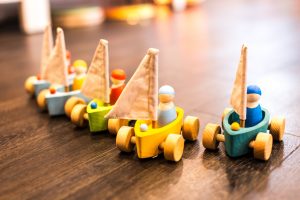
Wooden building blocks, train sets and shape sorters shouldn’t be soaked or submerged, since moisture can warp the wood or encourage mould in the grain. Instead, wipe with a cloth that’s damp rather than wet, using a small amount of mild soap if it’s grubby, then dry it straight away with a dry cloth.
A diluted vinegar spray can help lift dirt and disinfect, but test it on a hidden spot first if the toy is painted or varnished, as vinegar can dull some finishes. Older wooden toys sometimes benefit from a light sand and a coat of food-safe oil every so often to keep the wood in good condition, though this is more about maintenance than day to day cleaning.
4. Bath toys
Bath toys are notorious for growing mould inside, especially squirty ones with small holes that let water in and never quite drain out. After bath time, wash them in warm soapy water and squeeze out any trapped water from hollow toys before they go back in the basket. Letting them dry out properly between uses, rather than leaving them damp in a net in the shower, makes a real difference.
If you spot black specks inside a squirter toy, that’s mould, and it’s time to either clean it thoroughly with a diluted vinegar or diluted bleach solution (always rinse very well afterwards) or simply replace the toy. When buying new bath toys, ones without small holes are much easier to keep mould-free.
5. Electronic and battery-powered toys
These need a lighter touch. Turn the toy off and remove the batteries first if you can, then wipe the surface with a cloth that’s just barely damp, or a baby-safe wipe. For buttons and crevices, a cotton bud lightly dampened with water gets into the gaps without soaking the electronics. Never submerge these toys or spray liquid directly onto them, as it can damage the components or, worse, cause a short circuit. Let the toy air dry completely before putting the batteries back in.
6. Toys on the go

Toys don’t stop needing attention just because you’re out and about. A dropped toy on a café floor or a soft toy that’s been passed around at a baby group both need a wipe down before they go back to your baby. Keep a small pack of unscented, baby-safe wipes in your changing bag for exactly this, and a spare clean cloth bag to keep dropped toys separate from clean ones until you’re home.
Wipes are a good stopgap, but they’re not a full clean, so still give travel toys a proper wash with soap and water once you’re back. It’s also worth avoiding alcohol hand gel as a substitute cleaner for toys, since it’s formulated for skin, not for the materials toys are made from, and can dry out or damage some plastics and fabrics over time.
A few things worth keeping in mind
Always check the manufacturer’s instructions on a toy before cleaning it, especially anything with batteries, electronics, or a “not machine washable” label. If your baby has sensitive skin, eczema, or allergies, rinse cleaned toys more thoroughly to remove any trace of soap or vinegar. And if you’re using stronger cleaning products like diluted bleach, dilute it properly, rinse well, and let the toy air dry fully before handing it back, since residual chemical smell or dampness is a sign it needs more time.
If your baby seems to be picking up frequent colds or infections despite reasonable hygiene, it’s worth having a chat with your health visitor or GP, since this is common in babies and toddlers, especially once they start nursery or playgroup, but it’s always worth a professional opinion if you’re concerned.
Have a cleaning tip that works well for your family? Send it over and we’ll consider adding it to this guide.
Share This Story, Choose Your Platform!


Latest Post

Latest News To Your Inbox
Subscribe to hear about our latest blog posts, competitions and special offers.