
5 Things to know about Crawling
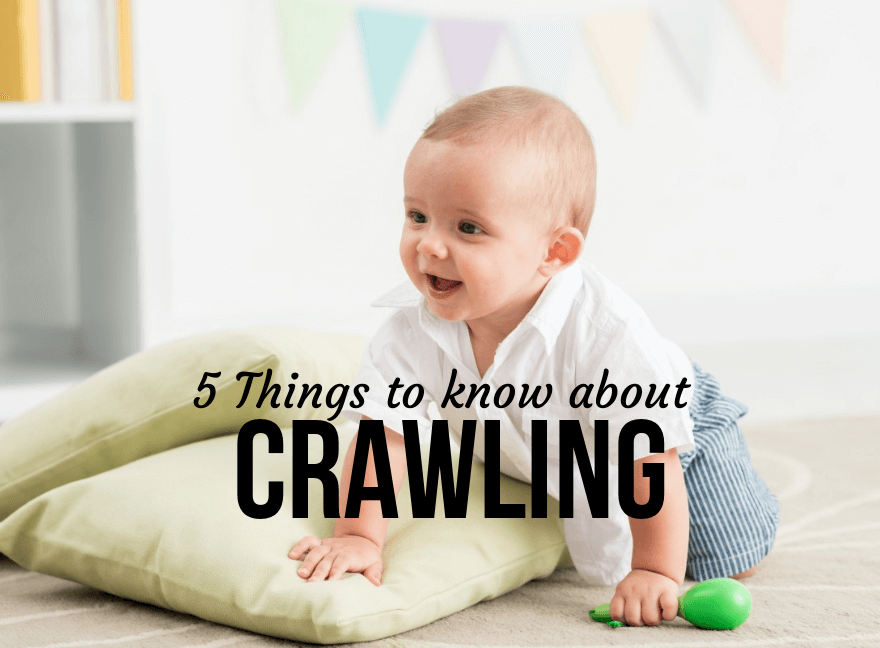
Crawling is one of those milestones that gets a lot of hype, and fair enough. It’s the moment your baby goes from being fairly stuck in one spot to becoming a proper, determined little explorer. It’s messy, it’s funny, and it changes your house overnight. Here are five things worth knowing about it, including a few points that don’t always get mentioned.
1. There’s no single “right” age, and no single “right” way to do it
Most babies start some form of crawling somewhere between 6 and 10 months, but that range is wide for a reason. Plenty of healthy, thriving babies crawl at 7 months. Plenty of others don’t get going until closer to their first birthday, and some skip crawling almost entirely and go straight to bottom shuffling, cruising along furniture, or standing and walking. All of this can be perfectly normal.
Before babies crawl in the classic hands-and-knees way, you’ll often see the groundwork being laid: pushing up on their arms during tummy time, rocking back and forth on hands and knees, reaching for toys while on their belly, or pivoting in a circle to get closer to something interesting. Some babies go backwards before they work out how to go forwards, which can be a bit baffling to watch (and occasionally lands them stuck under the sofa).
If your baby is 12 months or older and shows no interest in moving themselves around at all, whether that’s crawling, scooting, or bottom shuffling, it’s worth mentioning to your health visitor or GP at your next check. It’s usually nothing serious, but it’s the kind of thing worth having a professional take a look at rather than just comparing notes with other parents.
2. Belly crawling, hands-and-knees, bear crawl: they’re all valid
A lot of parents picture the “proper” crawl as hands and knees, tummy off the floor, moving in a nice steady pattern. In reality, babies get creative. Some start out commando-style, dragging themselves along on their tummy using their arms, sometimes with one leg doing most of the work. Others go for the “bear crawl”, hands and feet on the floor with bottom up in the air, which looks more like an early toddler walk than a crawl.
None of these styles is more correct than another, and there’s no strong evidence that one style leads to better outcomes than the rest. What matters more is that your baby is building strength, using both sides of their body, and getting the practice in. If your baby seems to strongly favour one arm or one leg over the other, or drags one side noticeably more than the other over several weeks, that’s worth flagging to your GP or health visitor, just so it can be checked over.
3. Babyproofing needs to happen before crawling starts, not after
Babies tend to become mobile faster than parents expect, so it’s worth getting the basics sorted while your baby is still mostly stationary. Get down on the floor at your baby’s eye level and have a proper look around the rooms they’ll be in. You’ll spot things you’d never notice from standing height: plug sockets, trailing phone chargers, the corner of the coffee table, that basket of shoes by the front door.
A few practical things worth sorting early:
- Fit stair gates at the top and bottom of any stairs, ideally before your baby is mobile enough to reach them.
- Anchor unsteady furniture and bookshelves to the wall, and secure the TV if it’s not wall mounted.
- Fit socket covers, and tidy away or shorten cords from blinds and lamps, as these are a genuine strangulation risk.
- Move small objects, coins, button batteries and anything that fits through a toilet roll tube out of reach, since choking hazards are the main worry at this stage.
- Check houseplants and cleaning products stored in low cupboards.
Babyproofing isn’t really a one-off job. As your baby’s reach and mobility improve, you’ll find yourself doing another sweep every few weeks. It’s also worth checking your local council or fire service, as some offer home safety visits that flag things you might miss.
4. You can encourage crawling, but you can’t really force it
There’s a fair bit you can do to give crawling a nudge without pushing your baby faster than they’re ready to go. Regular tummy time from early on (a few short sessions a day, building up gradually) is one of the best things you can do, as it strengthens the neck, shoulders and core muscles your baby needs for crawling. If your baby hates tummy time, try doing it on your chest instead of the floor at first, or get down on the floor with them face to face.
Placing a toy just out of reach is a classic trick, and it works because it gives your baby a reason to shift their weight and reach forward. A mirror propped up nearby can have the same effect. Giving your baby plenty of floor time in general, rather than long stretches in bouncers, swings or car seats, also helps, simply because muscles get stronger through practice.
One thing worth knowing: baby walkers with wheels are generally not recommended by paediatric organisations, including in guidance from the American Academy of Pediatrics, because they can actually delay motor development and carry a real risk of falls, particularly on stairs. Stationary activity centres that don’t move around are considered a safer alternative if you want something similar.
5. Crawling does more than get your baby from A to B
Crawling is genuinely useful groundwork for a lot of skills that come later. Moving on hands and knees builds strength through the shoulders, wrists, and core, which feeds directly into standing and walking. It also gets your baby using both sides of their body together in a coordinated way, which supports later skills like climbing stairs, catching a ball, and even things like handwriting further down the line.
There’s also a sensory side to it. As your baby crawls towards, around and under things, they’re learning about distance, depth and how their body fits through gaps, which is basically early spatial awareness. It’s also a good opportunity for you to talk to them as they move: naming what they’re reaching for, narrating what they’re doing, that sort of thing helps language development too, even though it’s not the main event.
It’s worth remembering that skipping crawling isn’t automatically a red flag. Some babies go straight from sitting to cruising to walking without much crawling at all, and most of the time that’s just their own version of normal. If you’re ever unsure whether your baby’s movement and development are on track, your health visitor is the right person to ask, and routine developmental checks are exactly the place to raise it.
However your baby gets there, whether it’s a textbook hands-and-knees crawl, an army-style drag across the carpet, or straight into wobbly first steps, it’s worth taking a minute to enjoy it. It doesn’t last long, and before you know it they’ll be up on their feet and moving even faster.
Share This Story, Choose Your Platform!



Latest Post


Latest News To Your Inbox
Subscribe to hear about our latest blog posts, competitions and special offers.