
5 Best Tips for Tighter Amazing Skin After a Baby
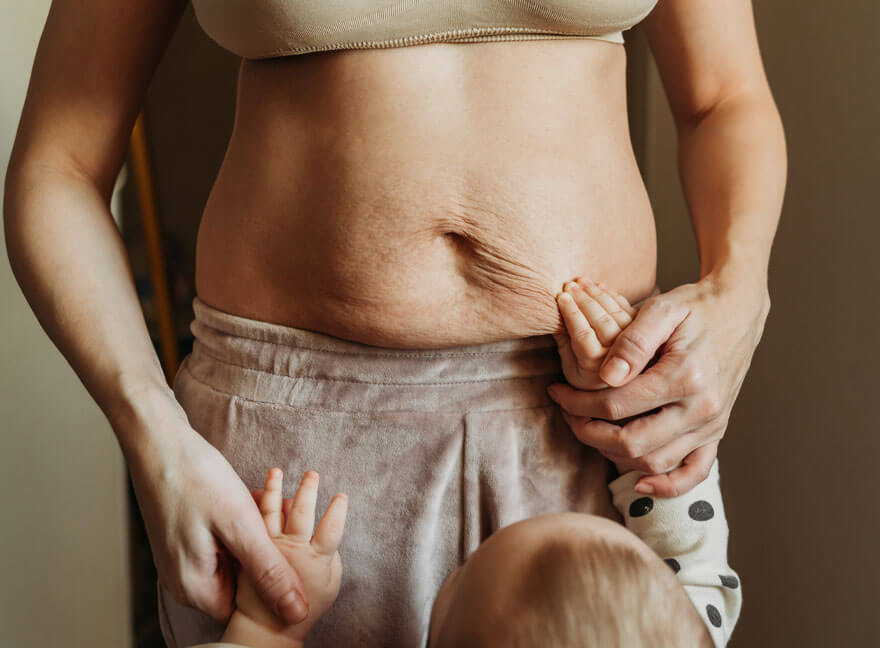
Pregnancy and the months after birth are hard on skin. Stretched abdominal skin, stretch marks, dry patches, hormonal breakouts, and that dark line down your belly (linea nigra) are all completely normal and usually fade over time on their own. But there’s a lot of noise online about “snapping back” or getting tighter skin fast, and most of it isn’t realistic or particularly kind to new mums.
Here’s what’s actually worth doing, and what’s worth skipping, if you want your skin to look and feel its best after having a baby. A couple of quick notes before we start: some of this takes months, not days, and if you’re breastfeeding or have any skin condition, it’s always worth checking with your GP, midwife or health visitor before adding new products or supplements.
First, know what’s actually going on with your skin
The “looseness” many mums notice around the tummy isn’t purely a skin issue. Your abdominal muscles and connective tissue stretch a lot during pregnancy, and for some women this leads to diastasis recti (a gap between the abdominal muscles). No amount of cream will fix that, because it’s a muscle and tissue issue, not a surface skin one. If your tummy still feels domed, weak, or separated months after birth, it’s worth asking your GP or a women’s health physiotherapist to check for this. Gentle core rehab exercises, done properly, help far more than any lotion.
Stretch marks are also mostly about genetics and how much your skin was stretched, rather than anything you did or didn’t do. They typically fade from red or purple to a lighter silvery colour over 12 to 18 months regardless of what you put on them. Products can help with itchiness and comfort while your skin is stretching, but there’s no cream, oil or serum with strong evidence behind it for making stretch marks disappear completely.
1. Get your hydration and diet basics right
Water alone won’t erase stretch marks, but genuinely under-hydrated skin does look duller, flakier and less resilient, and dehydration is common when you’re up in the night feeding and forgetting to look after yourself. Aim to keep a water bottle near wherever you feed your baby, since that’s often the only time you’re sitting still for long enough to actually drink.
Your diet matters more for skin repair than most people realise. Protein is especially important postpartum, since it’s needed to rebuild collagen and tissue. Try to include a source of protein at most meals (eggs, yoghurt, beans, fish, chicken) along with plenty of fruit and vegetables for vitamin C, which your body needs to make collagen. Omega-3 fats from oily fish, walnuts or flaxseed can help with skin dryness too. If you’re breastfeeding, your energy and nutrient needs are higher than usual, so this isn’t the time for restrictive eating.
2. Build a simple, low-risk skincare routine
Keep it basic in the first few months: a gentle cleanser, a fragrance-free moisturiser, and daily SPF on any exposed skin, especially your face if you’re dealing with melasma or pregnancy mask (patches of darker pigmentation that many women get and that can be made worse by sun exposure).
Be careful with actives if you’re pregnant or breastfeeding. Retinoids (retinol, tretinoin and similar ingredients) are generally advised against during pregnancy and breastfeeding because we don’t have enough safety data, so it’s best to avoid these and check with your doctor before using them. Vitamin C serums and hyaluronic acid are considered lower risk and can help with hydration and brightness, but if you’re ever unsure about an ingredient, ask your pharmacist, GP or health visitor rather than guessing.
For itchy, stretching skin on your bump, thighs or breasts, a plain, thick moisturiser or emollient applied a couple of times a day is usually more useful than expensive “anti stretch mark” creams. The main benefit is comfort, not prevention, since stretch marks are largely determined by genetics.
3. Move your body when you’re cleared to
Exercise genuinely does improve skin tone and circulation over time, and it’s good for your mood and sleep too, which indirectly helps your skin. But timing matters. Most women are advised to wait for their 6 week postnatal check before starting anything more than gentle walking, and if you had a caesarean or a more complicated birth, you may need longer. Always get the go-ahead from your GP or midwife first.
Once you’re cleared, start with gentle, low-impact movement: walking with the pram, postnatal yoga, or pelvic floor and core exercises specifically designed for after birth. These help rebuild the muscle and connective tissue support under your skin, which does more for that “tighter” feeling than any topical product. Jumping straight into high-intensity workouts before your body is ready can actually make issues like diastasis recti or pelvic floor weakness worse, so build up gradually.
4. Prioritise sleep and stress where you can
This one gets overlooked, but stress hormones and poor sleep genuinely affect skin: they’re linked to breakouts, dullness and slower healing. Nobody with a newborn is getting perfect sleep, and that’s fine, but small things help. Splitting night feeds with a partner where possible, napping when your baby naps rather than tackling chores, and asking for help from family or friends all give your body more chance to repair itself, skin included.
If you’re finding things overwhelming, low, or anxious most of the time rather than just tired, do mention this to your GP or health visitor. Postnatal depression and anxiety are common and treatable, and looking after your mental health matters far more than any skincare routine.
5. Be patient, and know when to ask for extra help
Skin, muscle and connective tissue changes after birth can take a good year or more to settle, and for some women certain changes (like faded stretch marks, softer tummy skin, or a separated belly button area) are permanent to some degree, and that’s completely normal. If loose skin or a separated abdomen is bothering you significantly once you’re well past the 6 to 12 month mark and you’ve been doing appropriate core rehab, it’s worth talking to your GP about a referral to a physiotherapist, or discussing options like cosmetic procedures further down the line if that’s something you’re interested in. These are personal decisions with no rush attached to them.
Above all, try to go easy on yourself. Your skin has just done something remarkable, growing and stretching to grow a whole other person. A sensible routine, decent nutrition, gentle movement once you’re cleared, and enough rest will do far more for your skin (and the rest of you) than chasing quick fixes ever will.
Share This Story, Choose Your Platform!


Latest Post


Latest News To Your Inbox
Subscribe to hear about our latest blog posts, competitions and special offers.